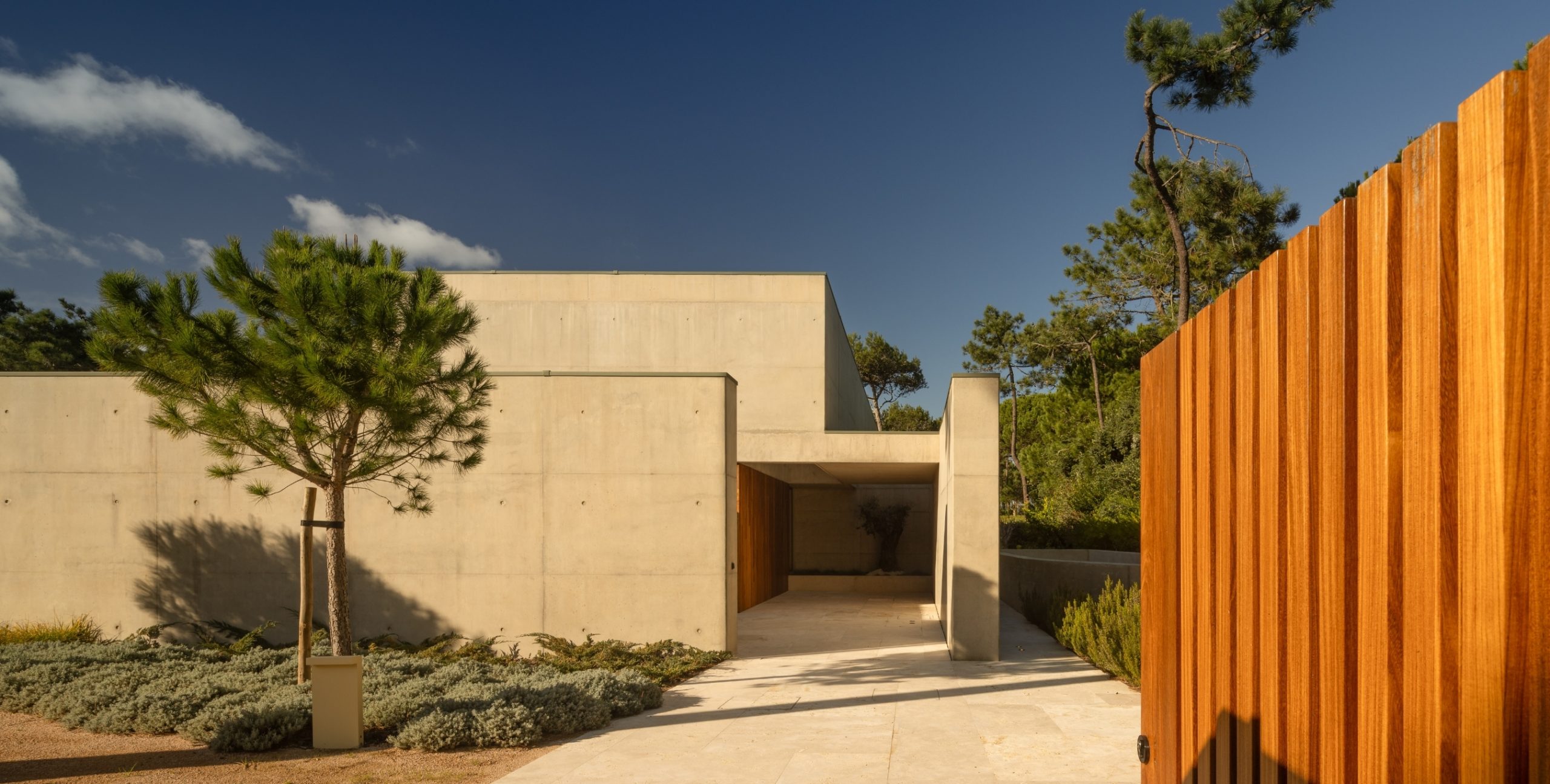
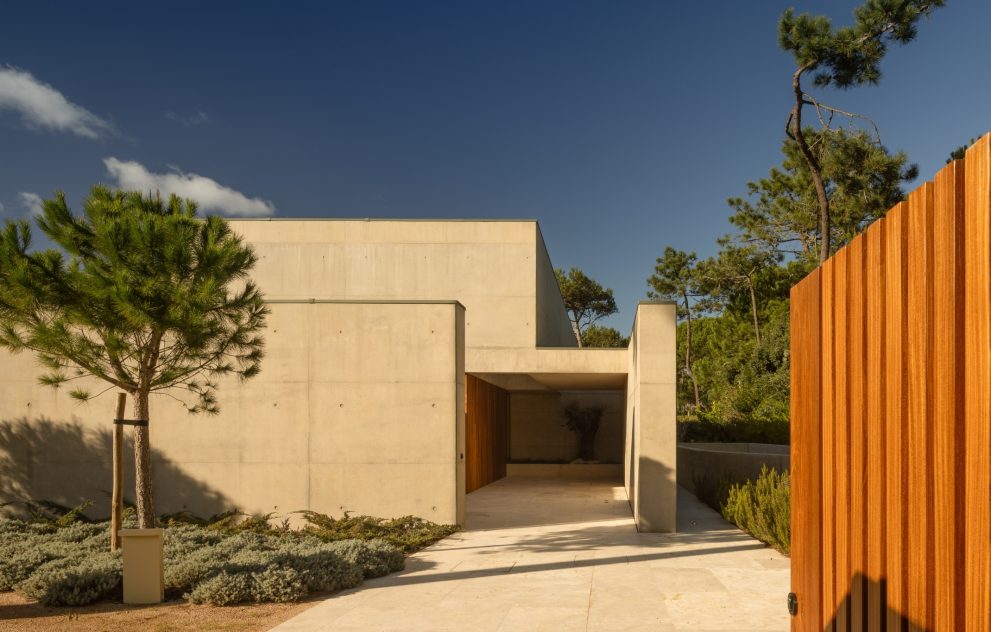
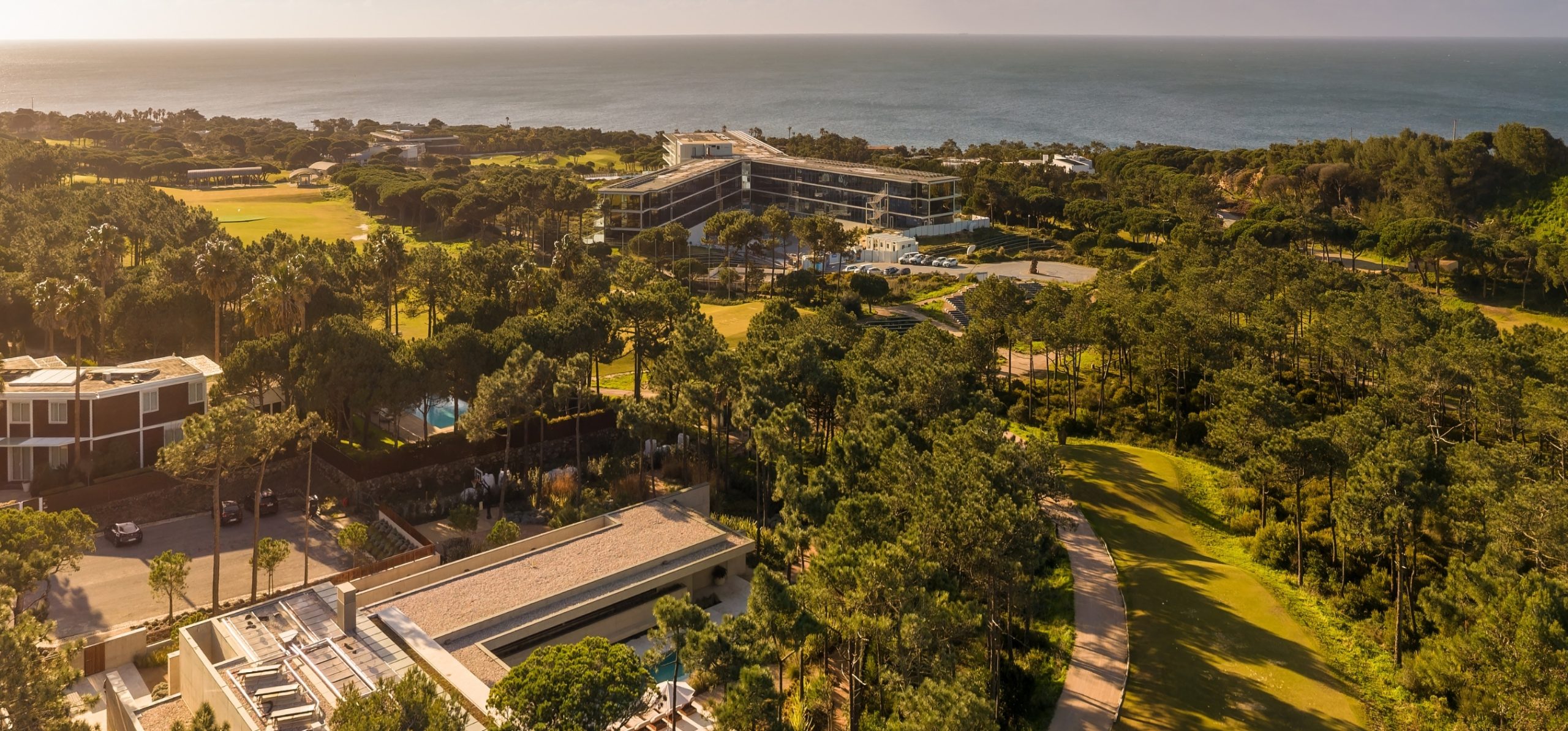
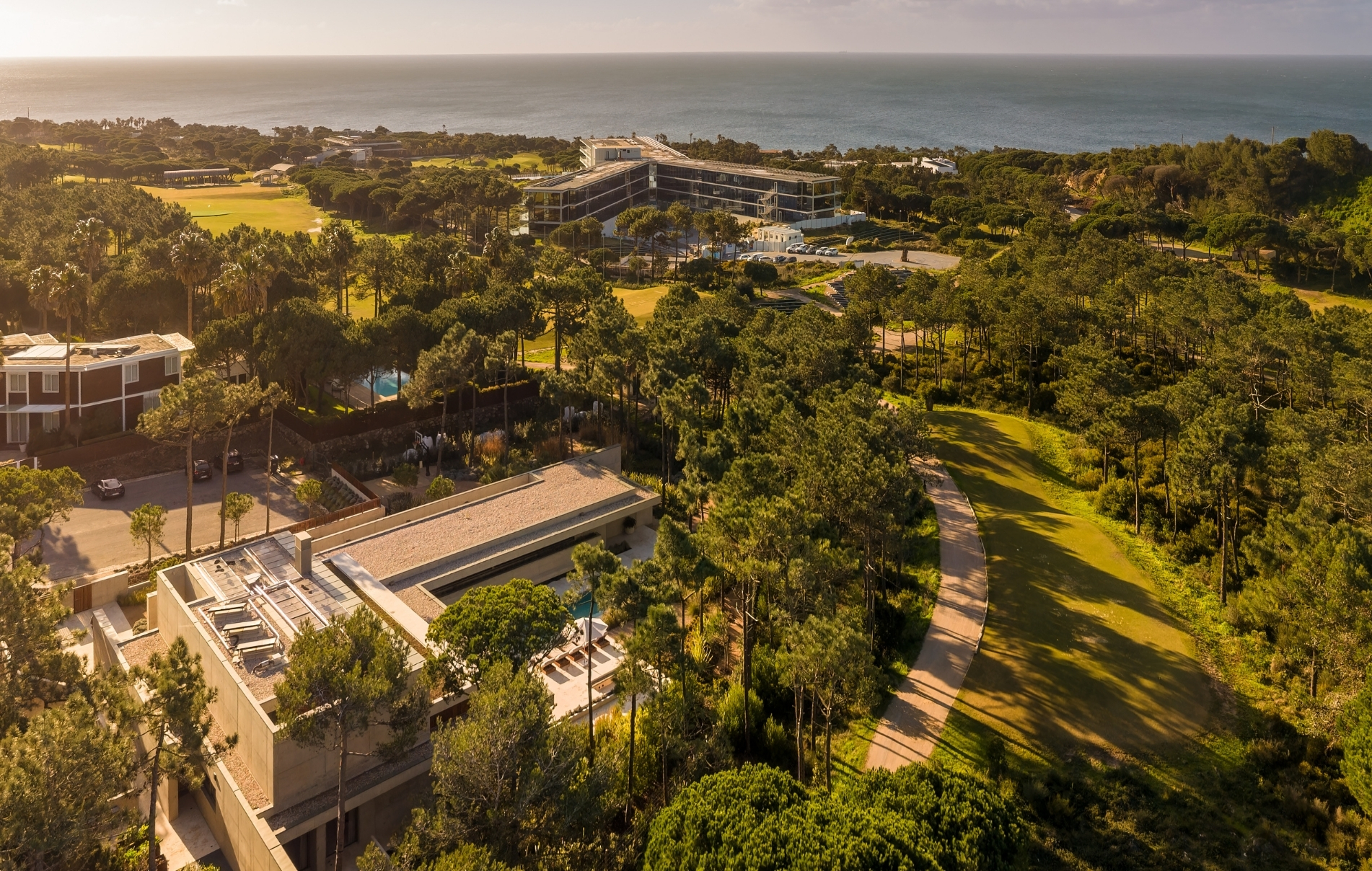
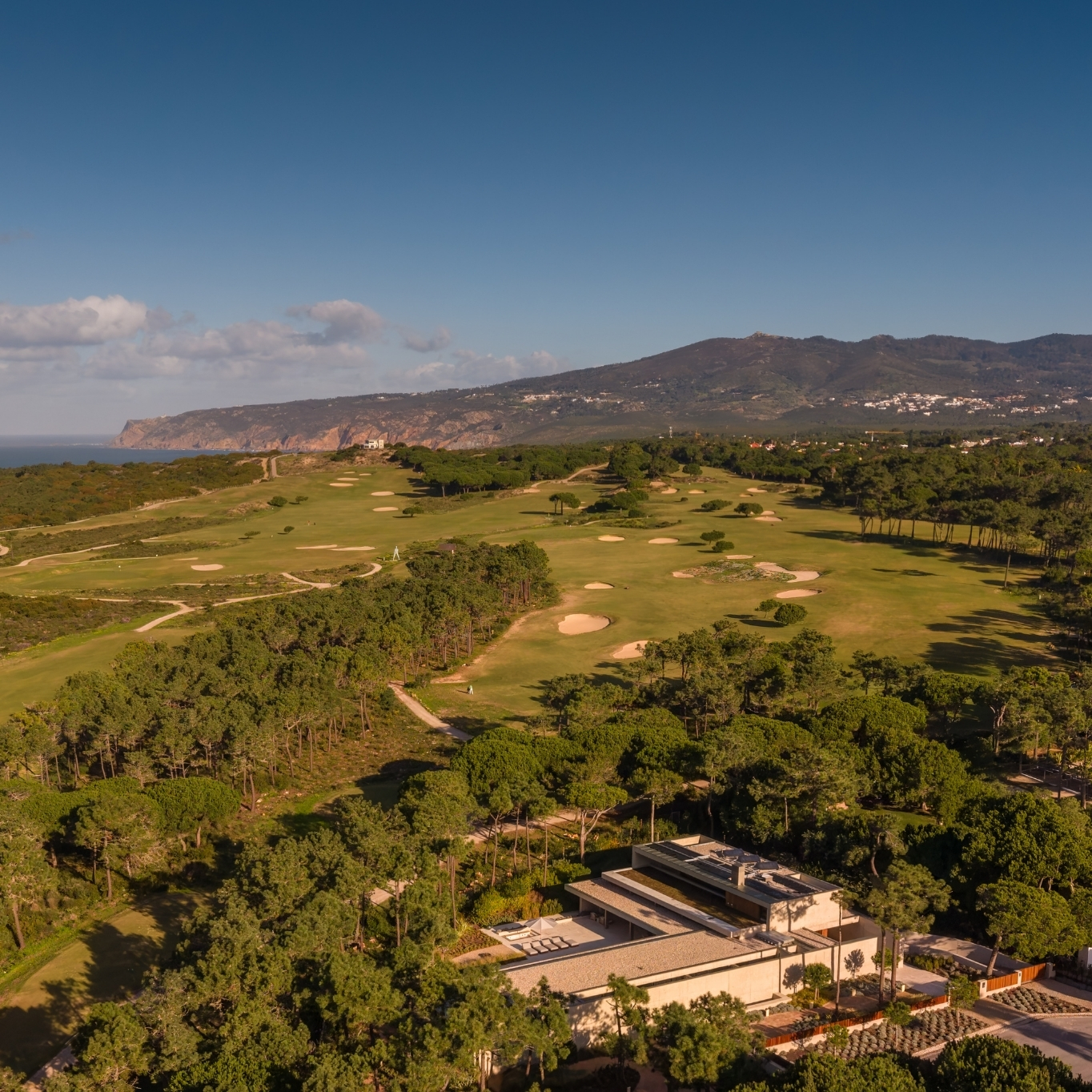
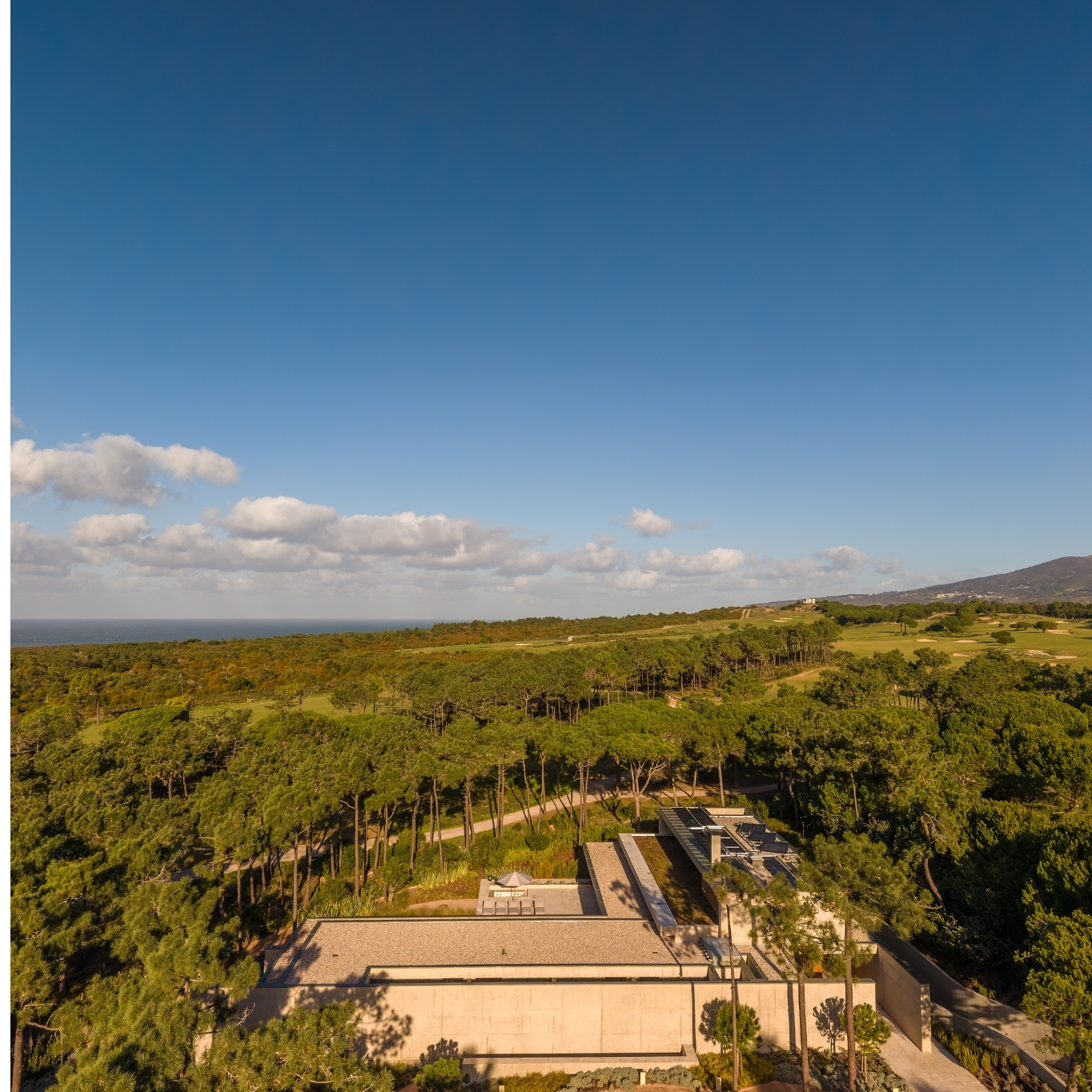
Set within one of Cascais’ most established residential areas, the project responds to orientation, climate and surrounding vegetation.
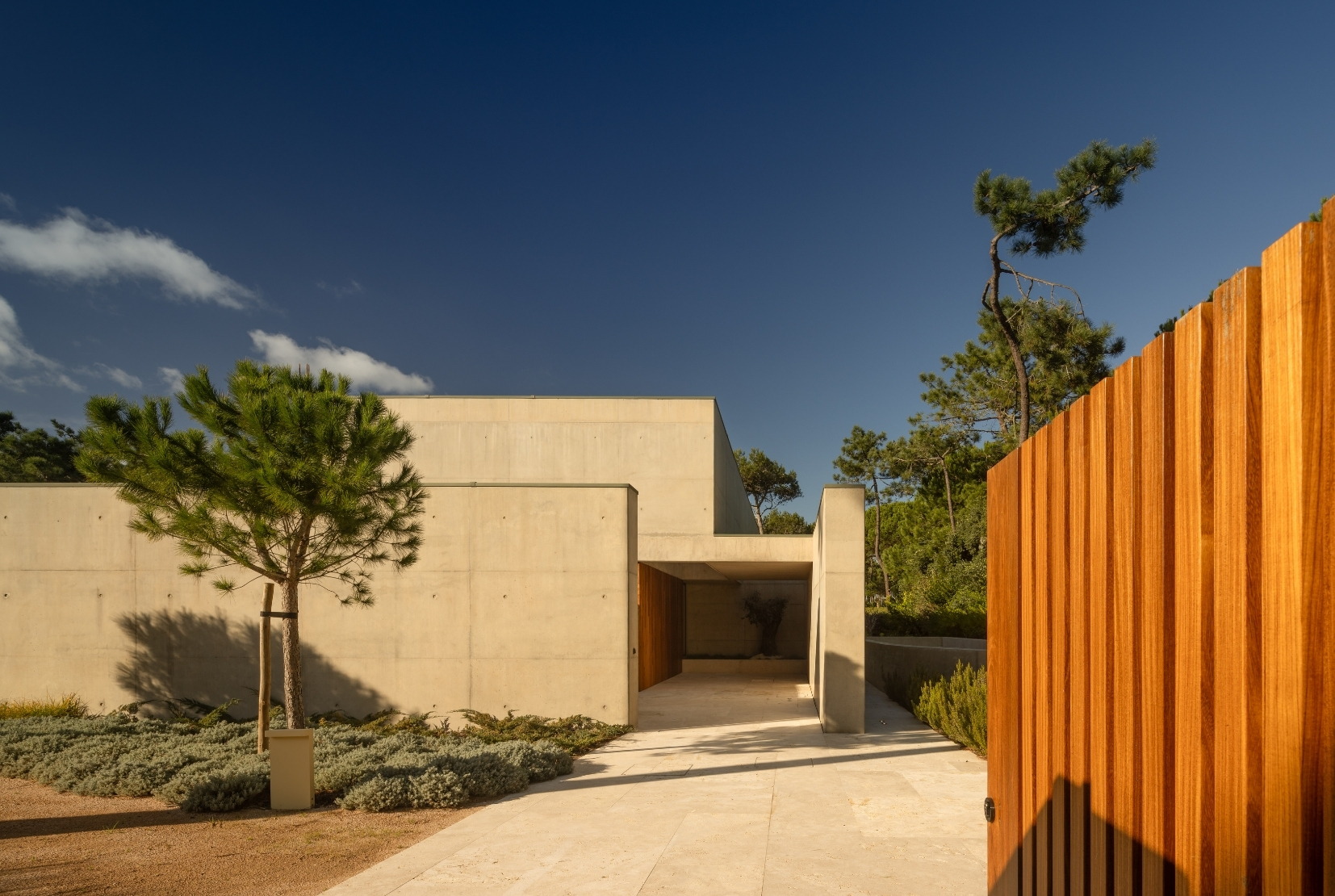
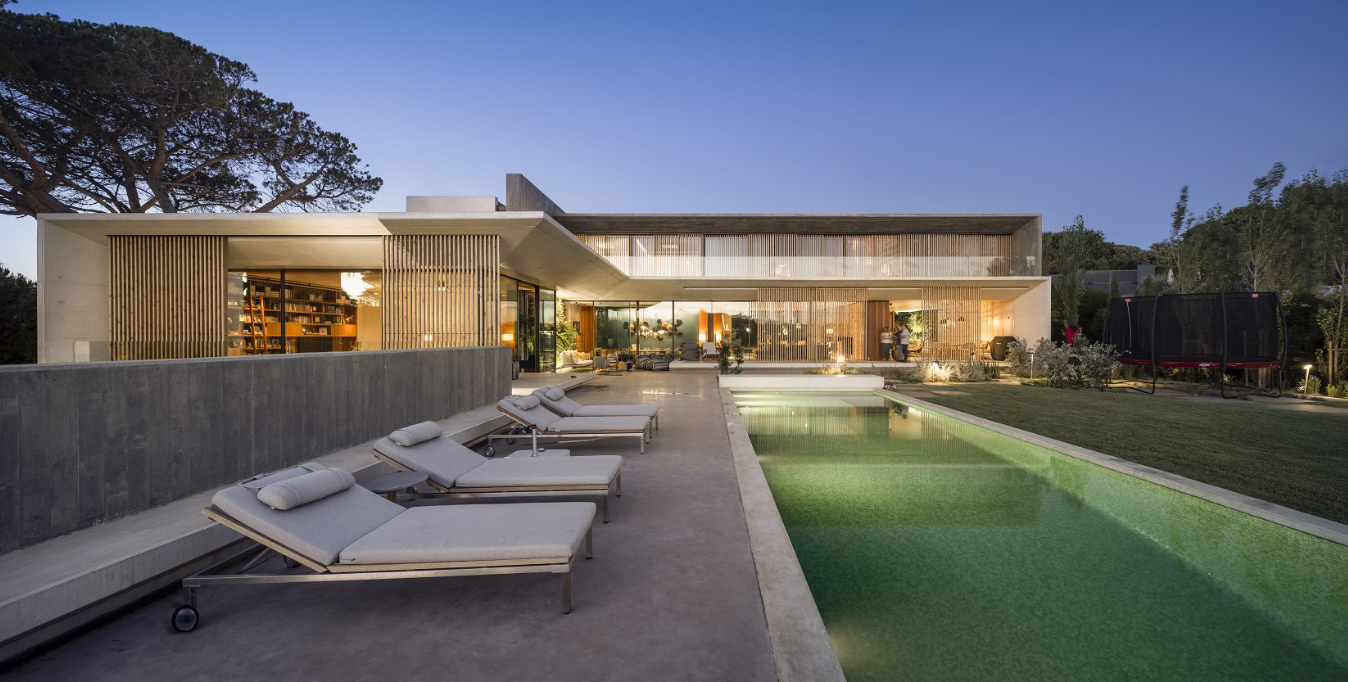
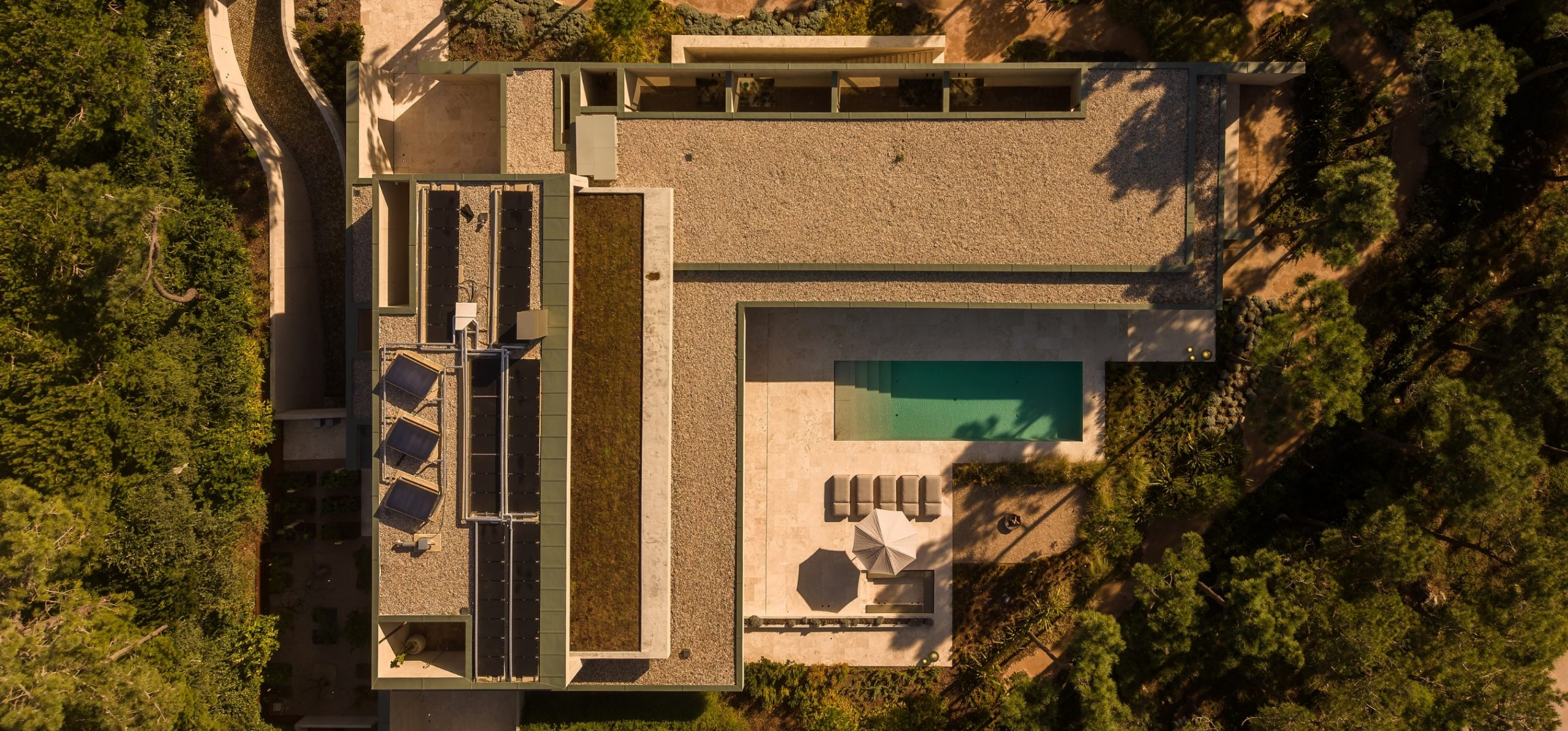
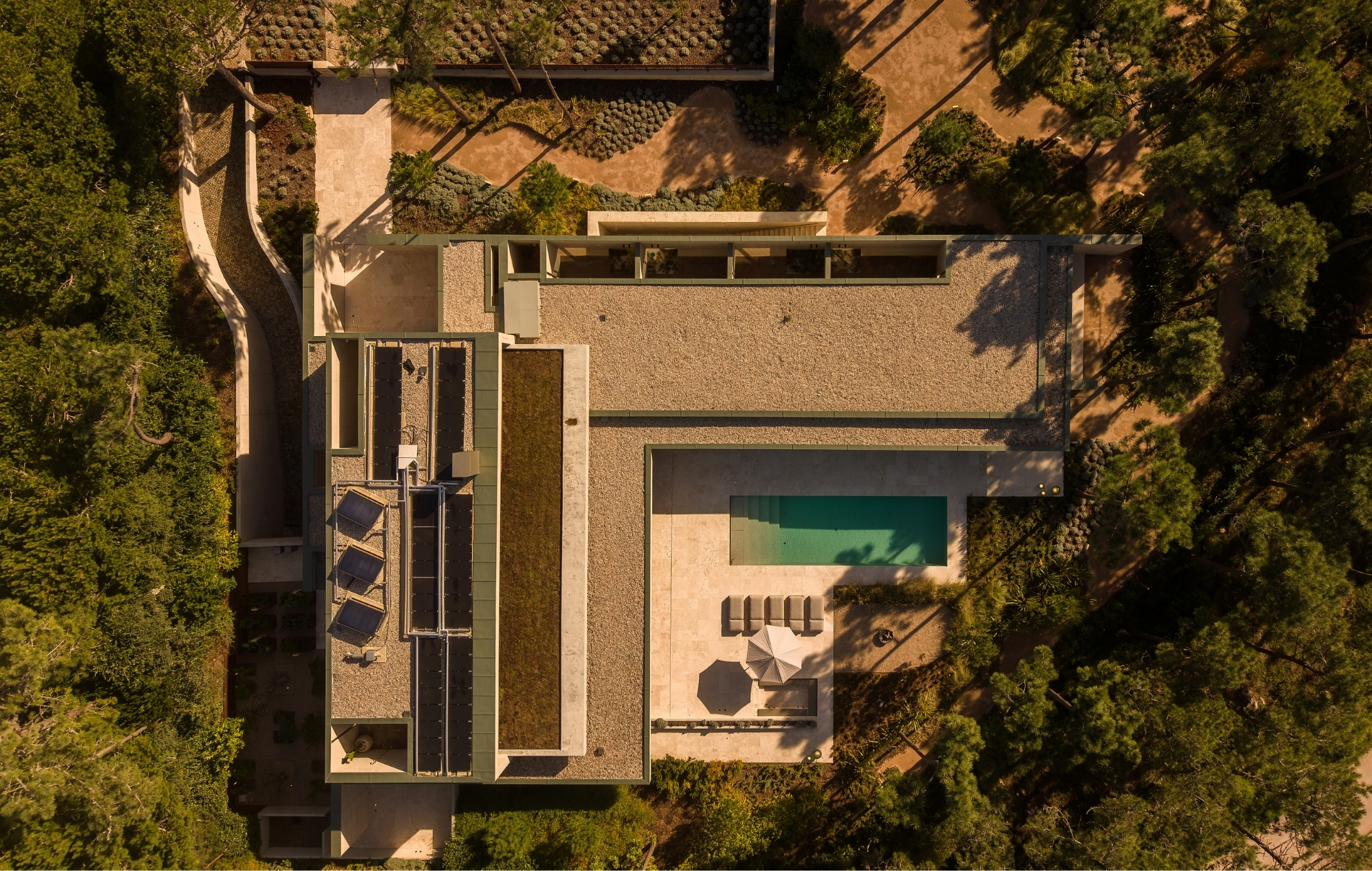
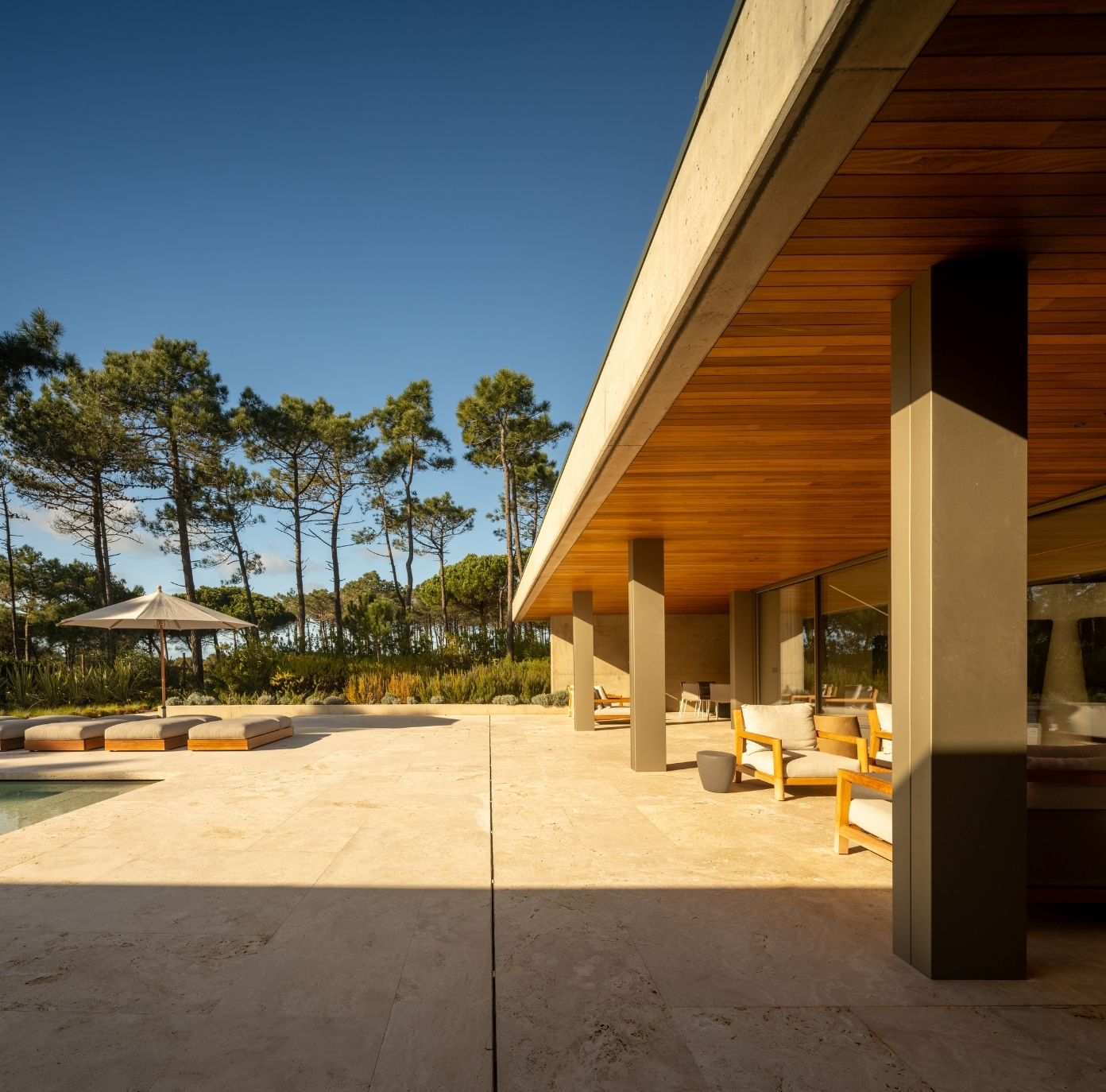
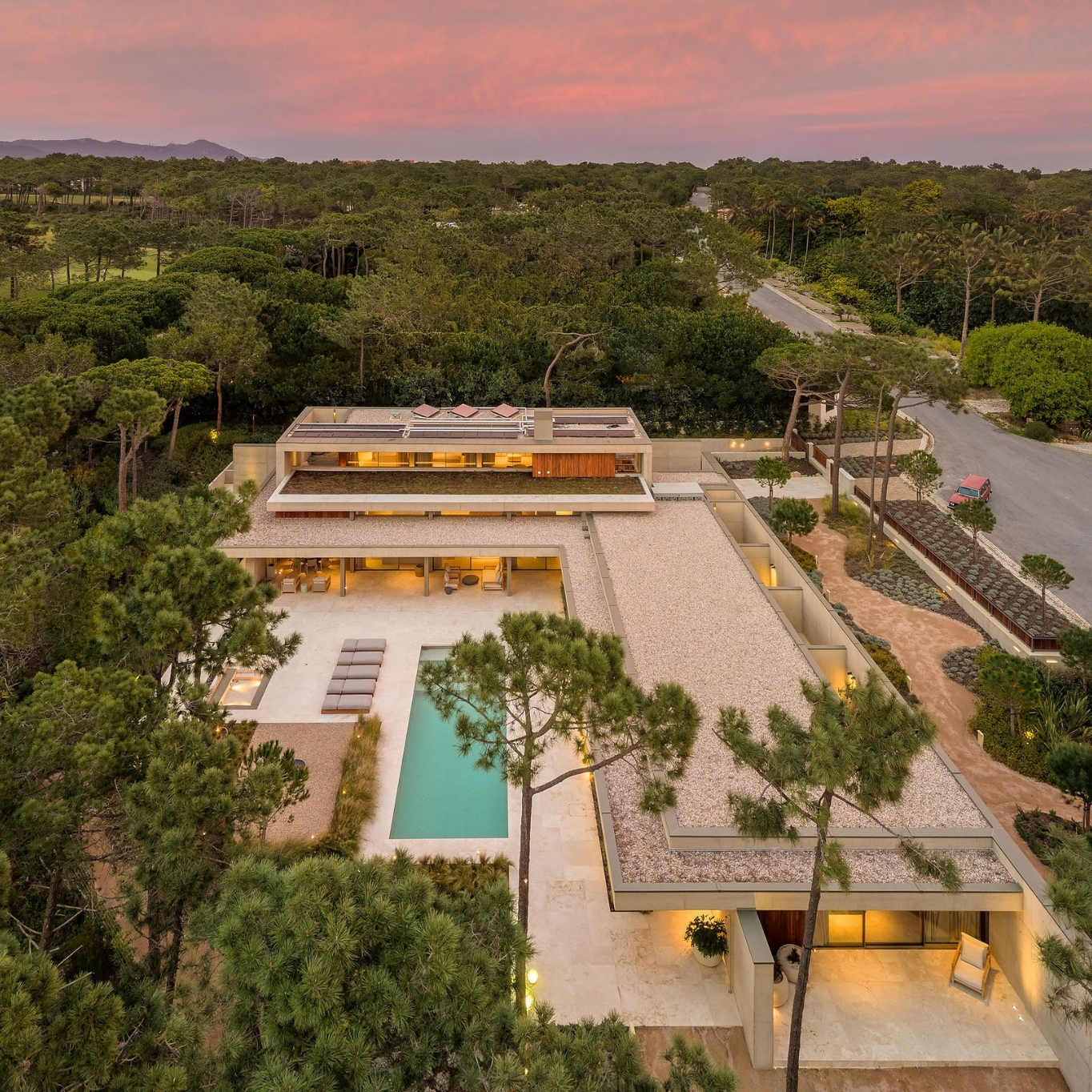
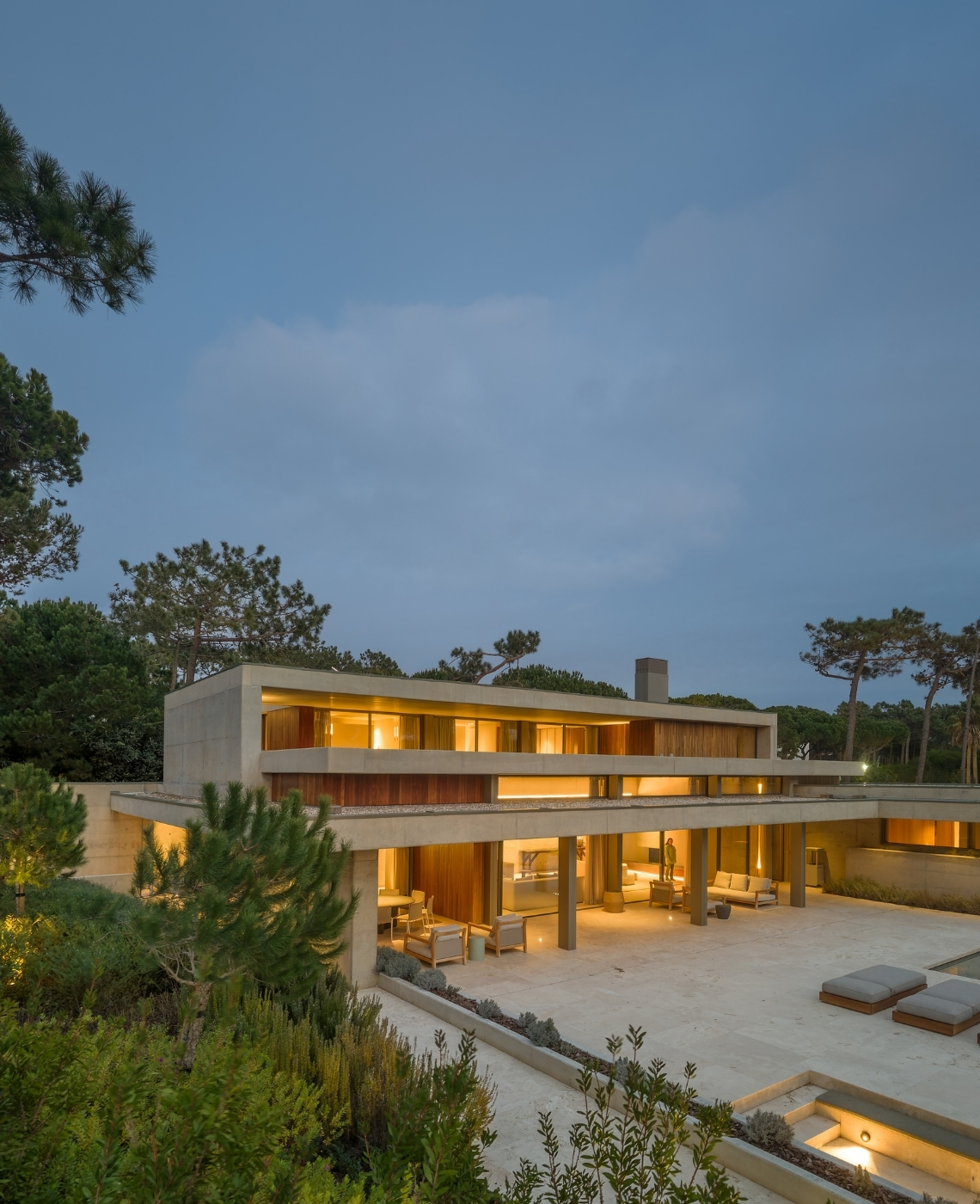
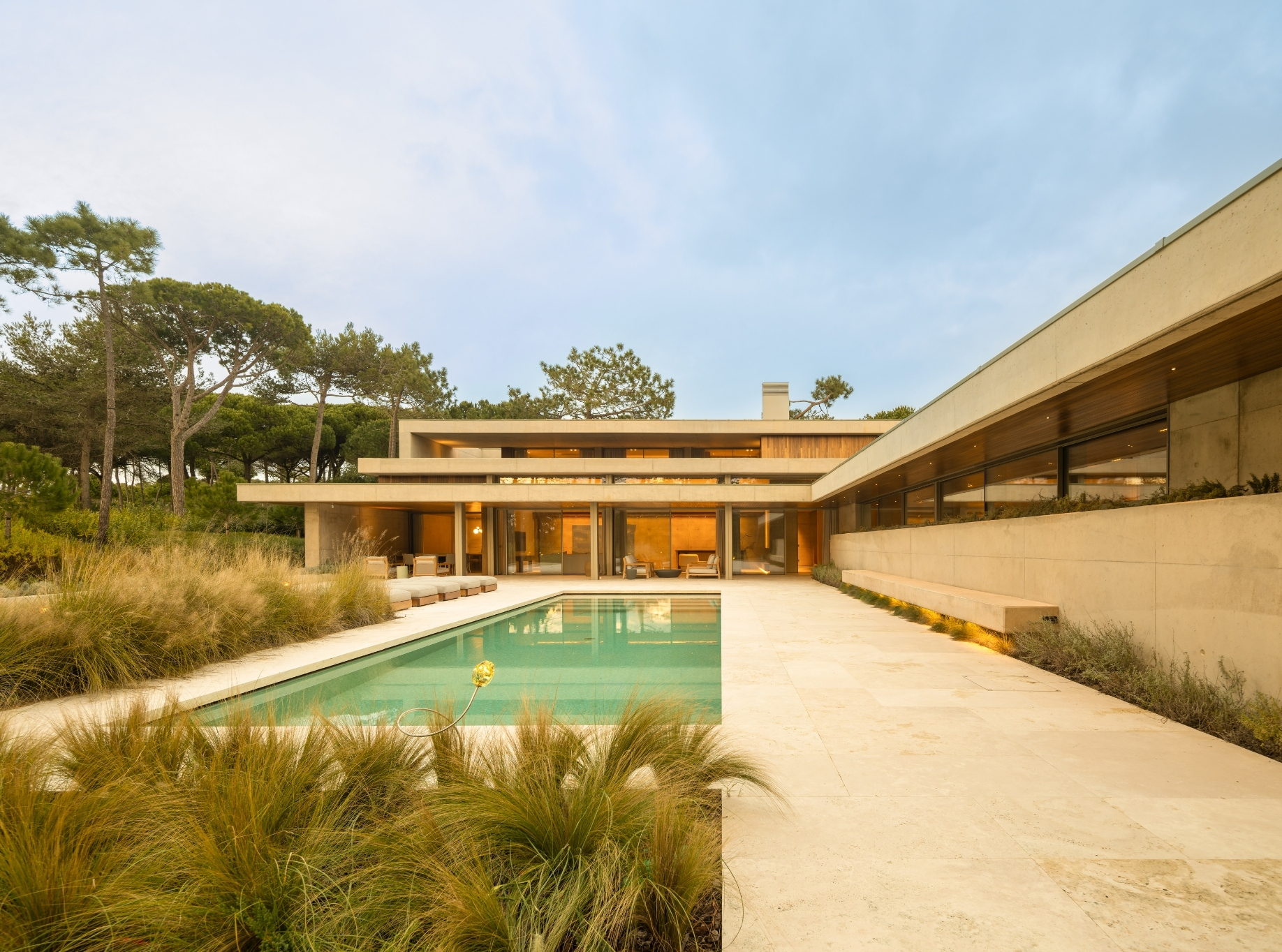
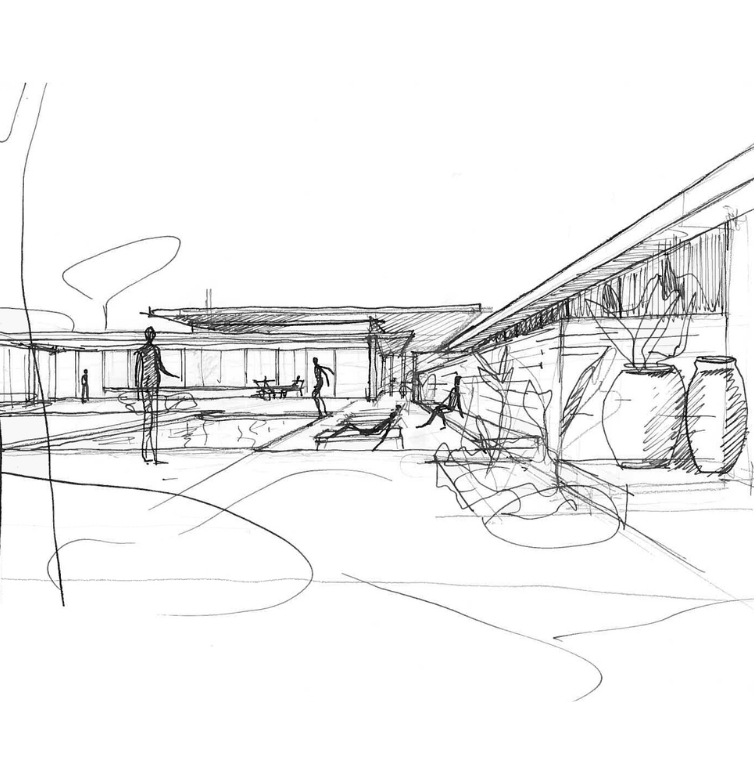
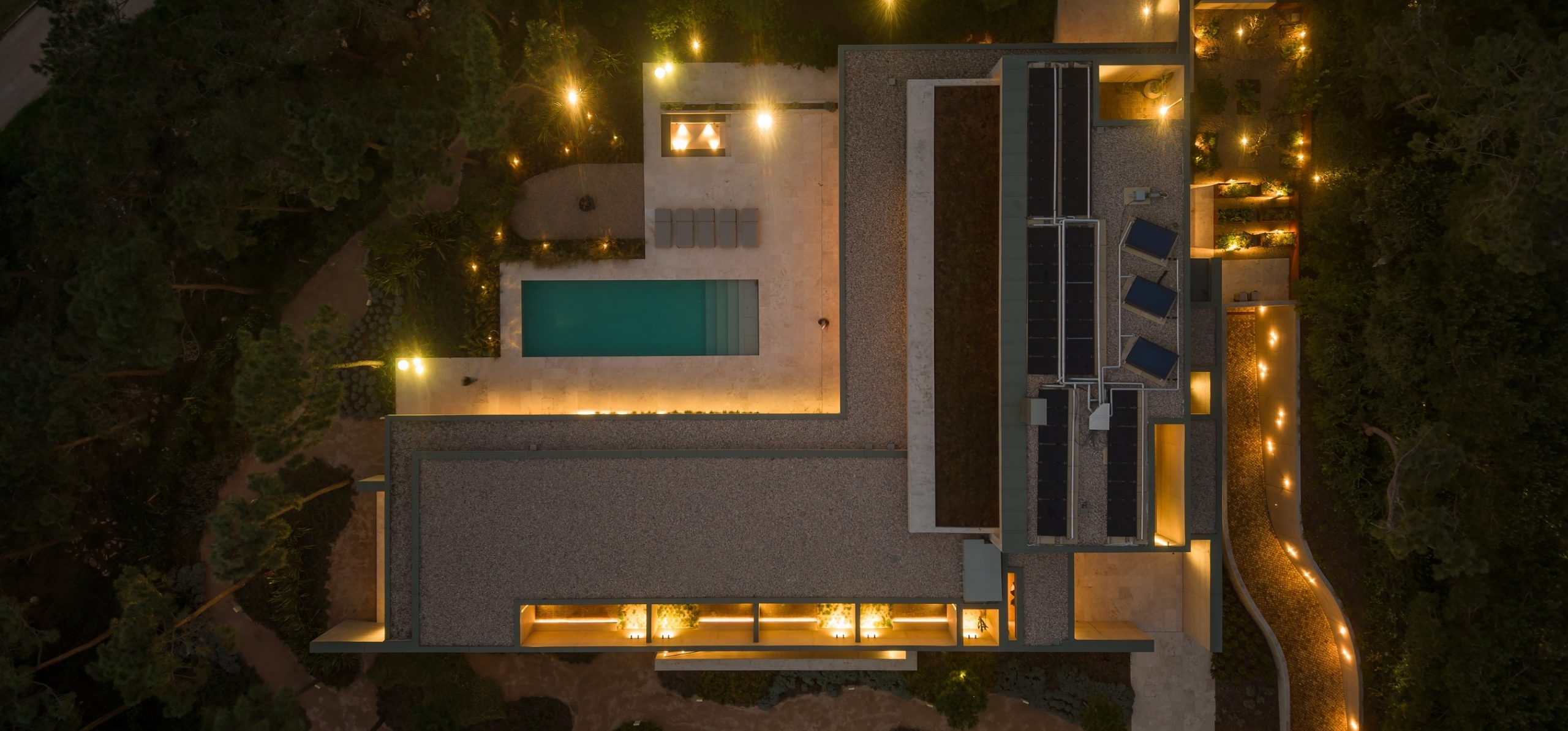
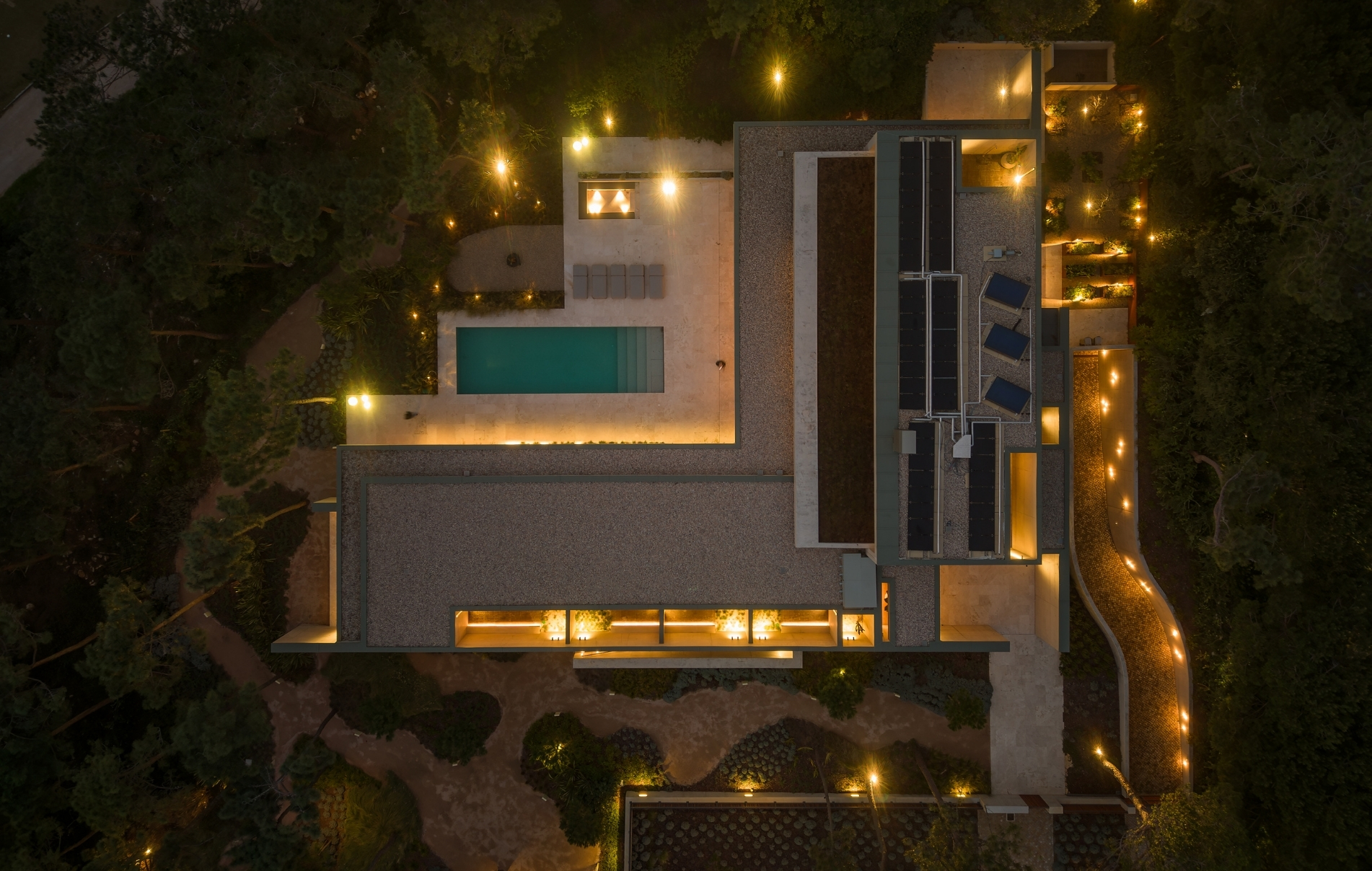
The L-shaped layout creates a protective edge towards the street while opening the house towards the southwest facing garden and pool. This approach maximises natural light, ensures privacy and strengthens the connection with the landscape.
Architectural Elements
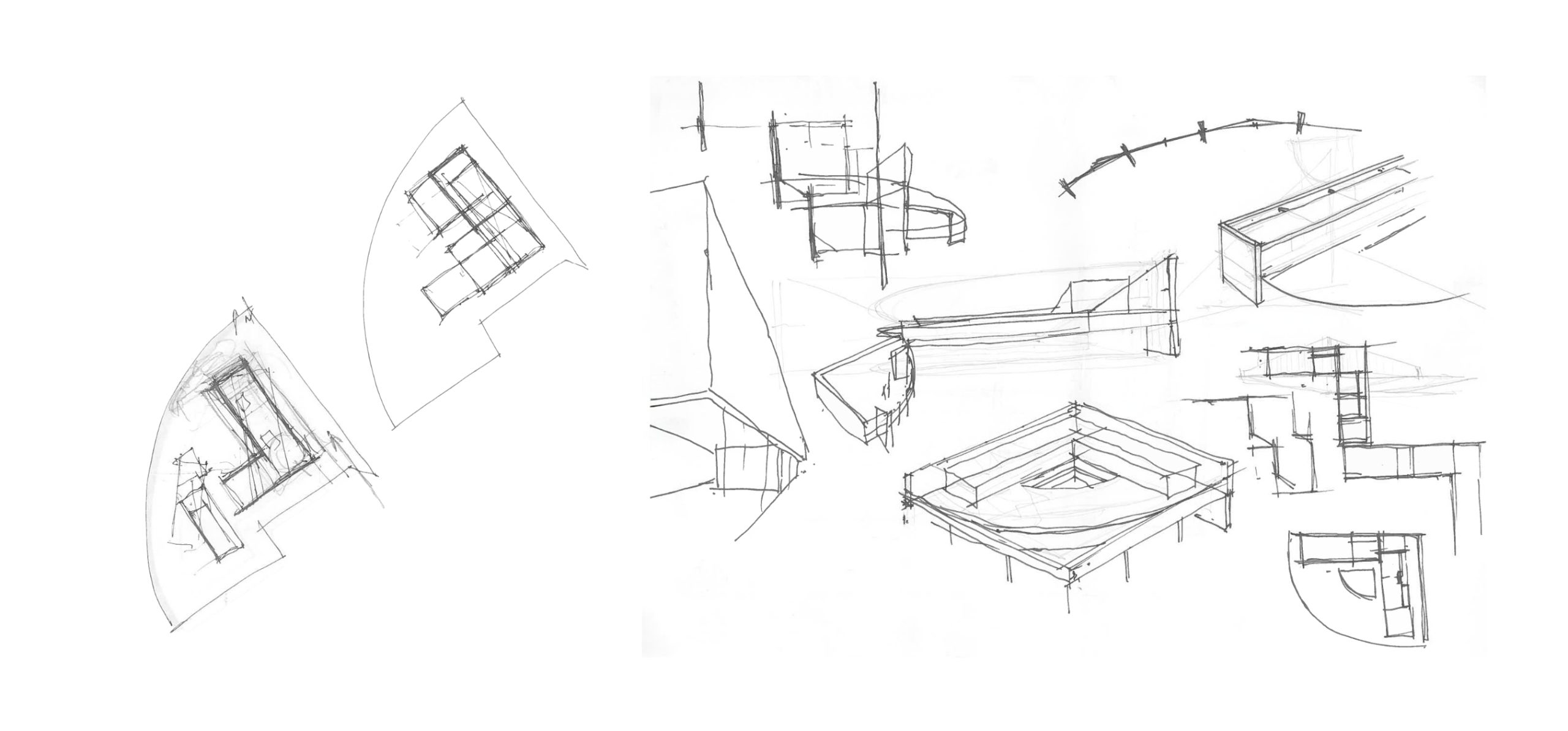
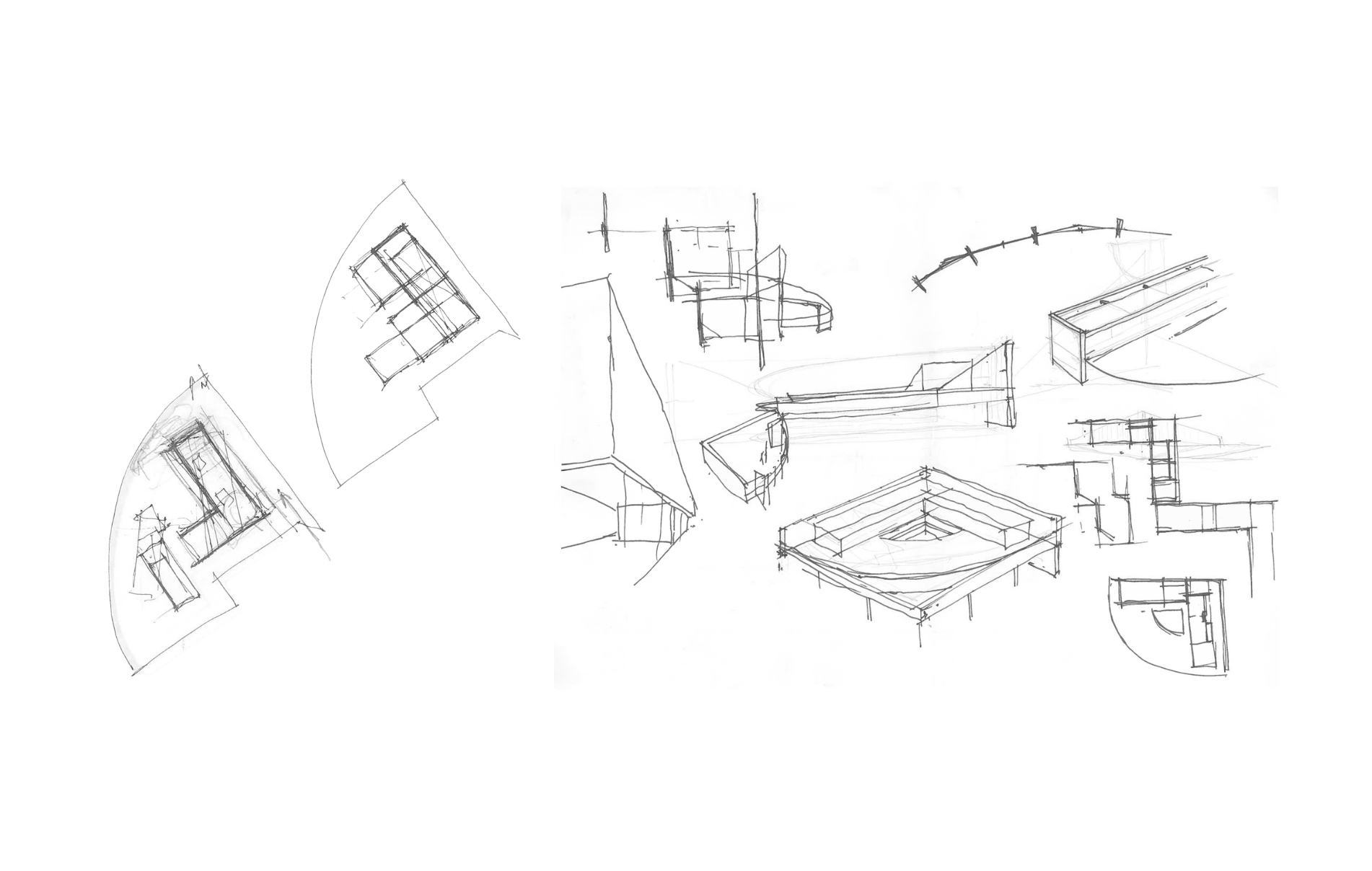
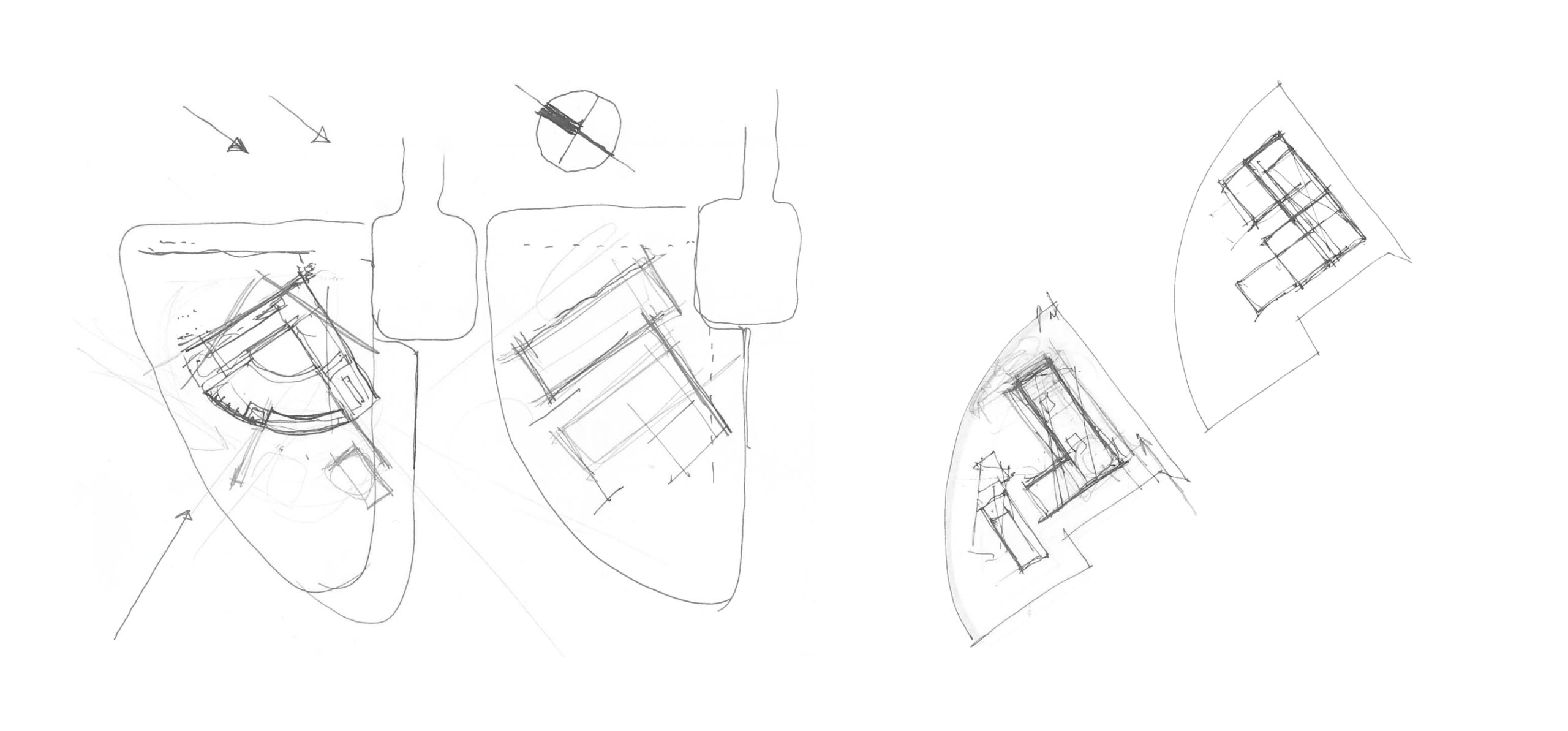
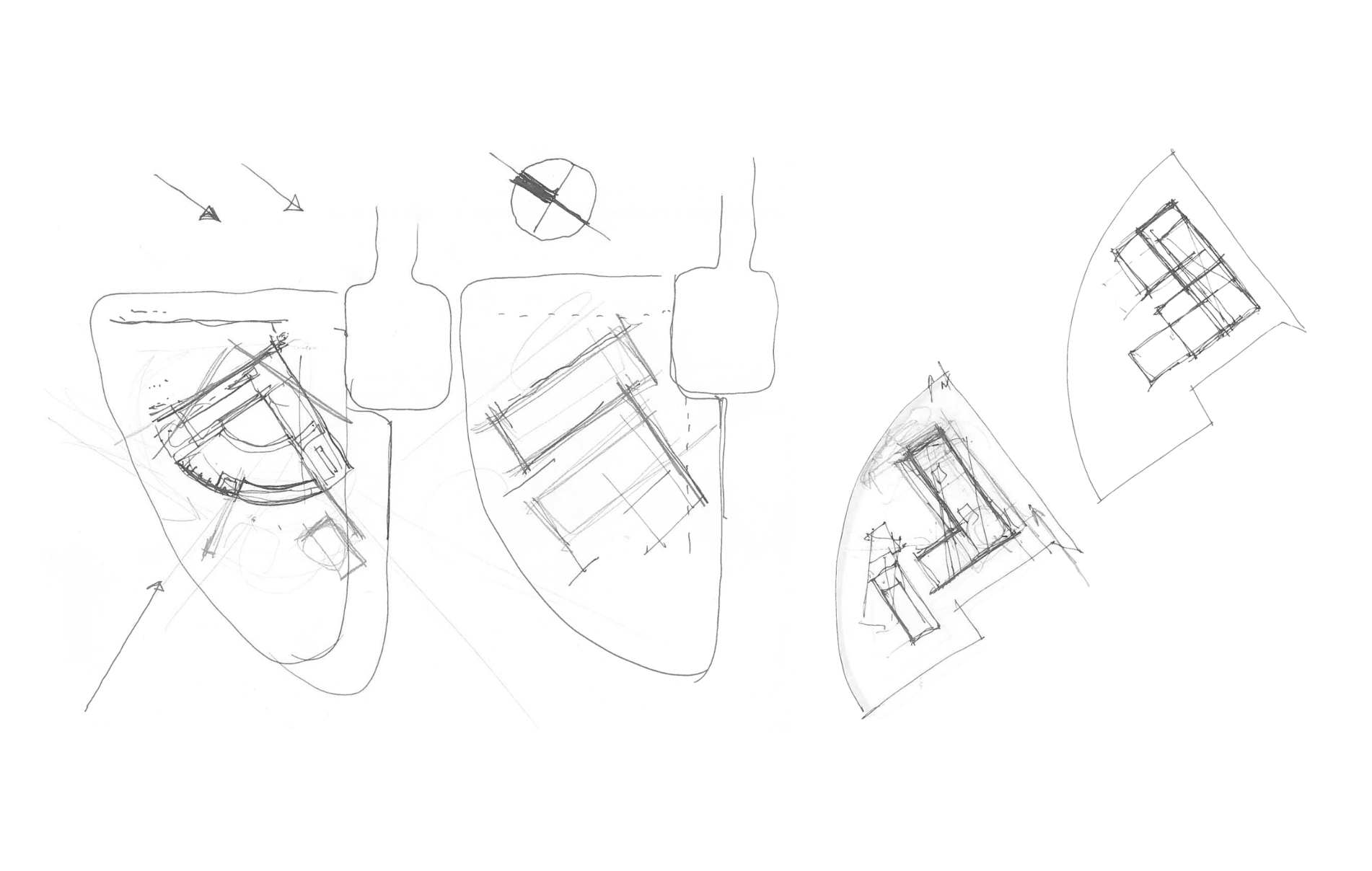
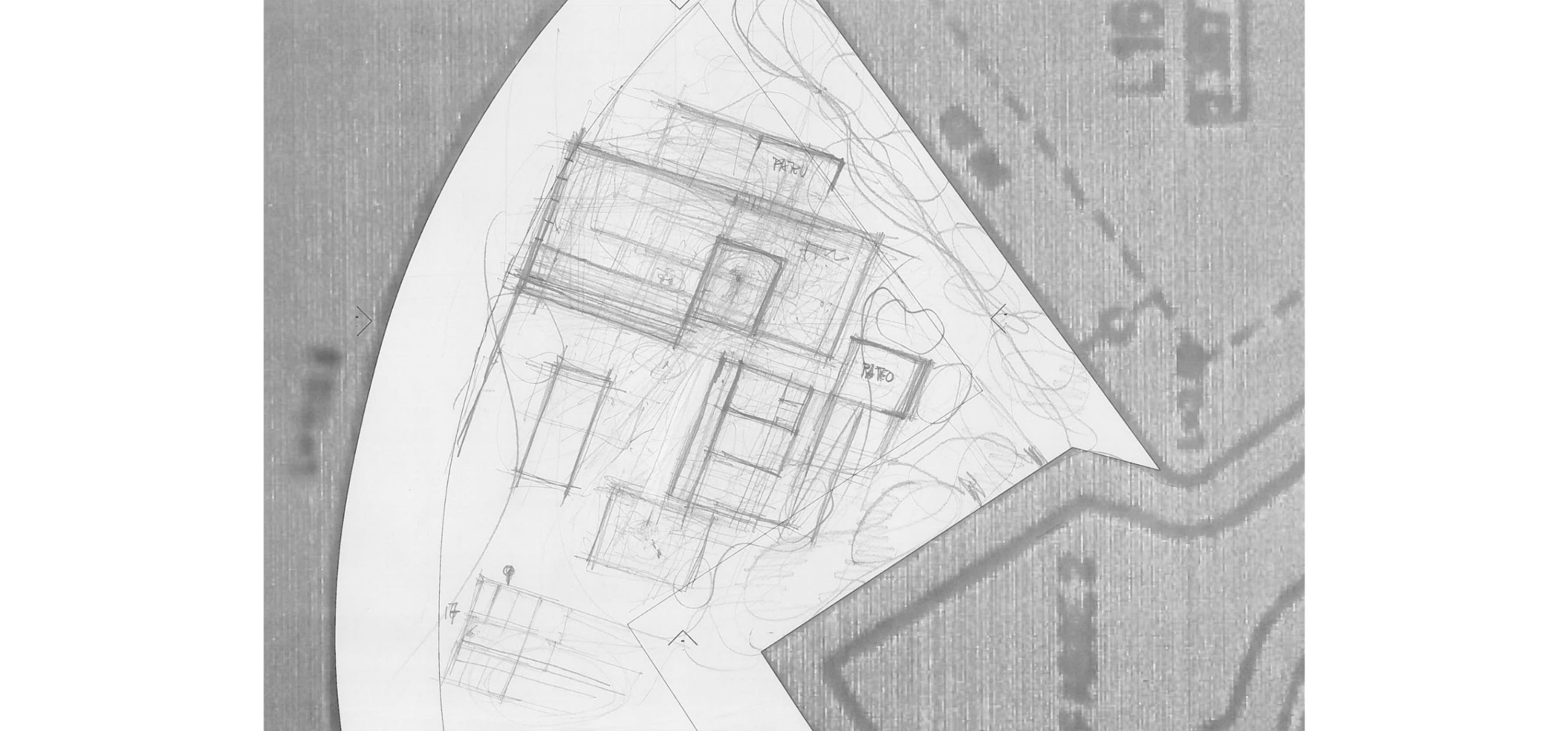
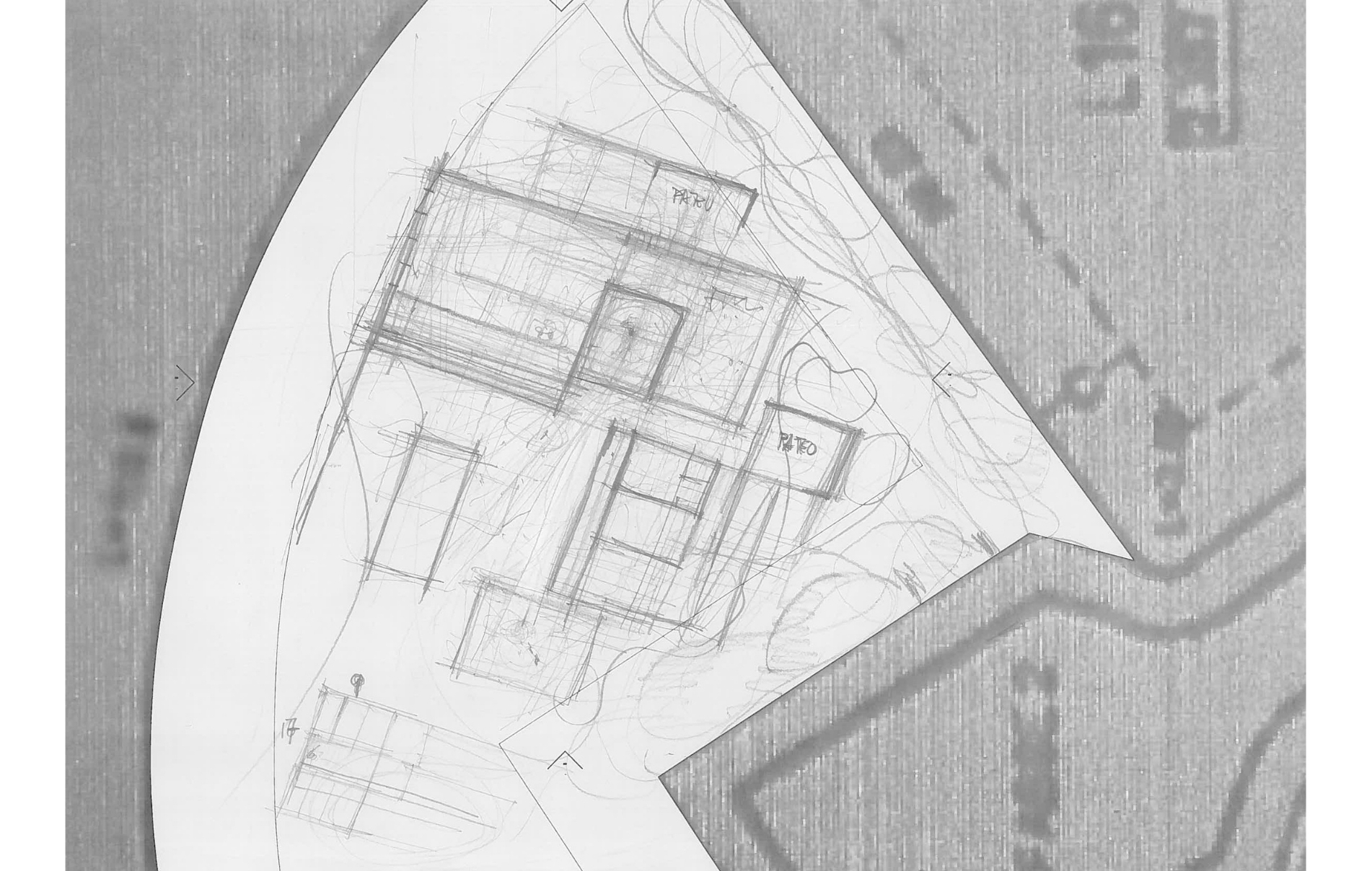
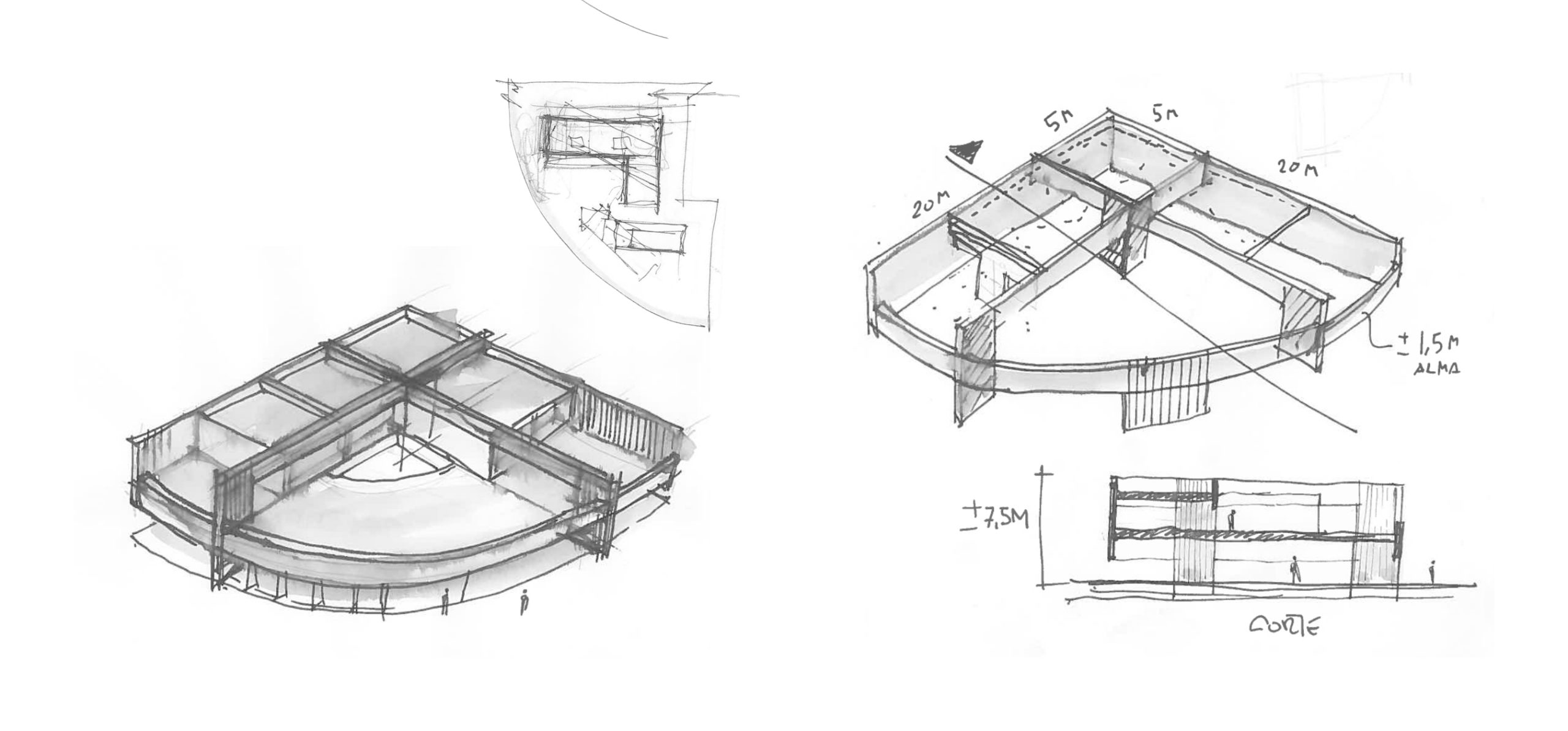
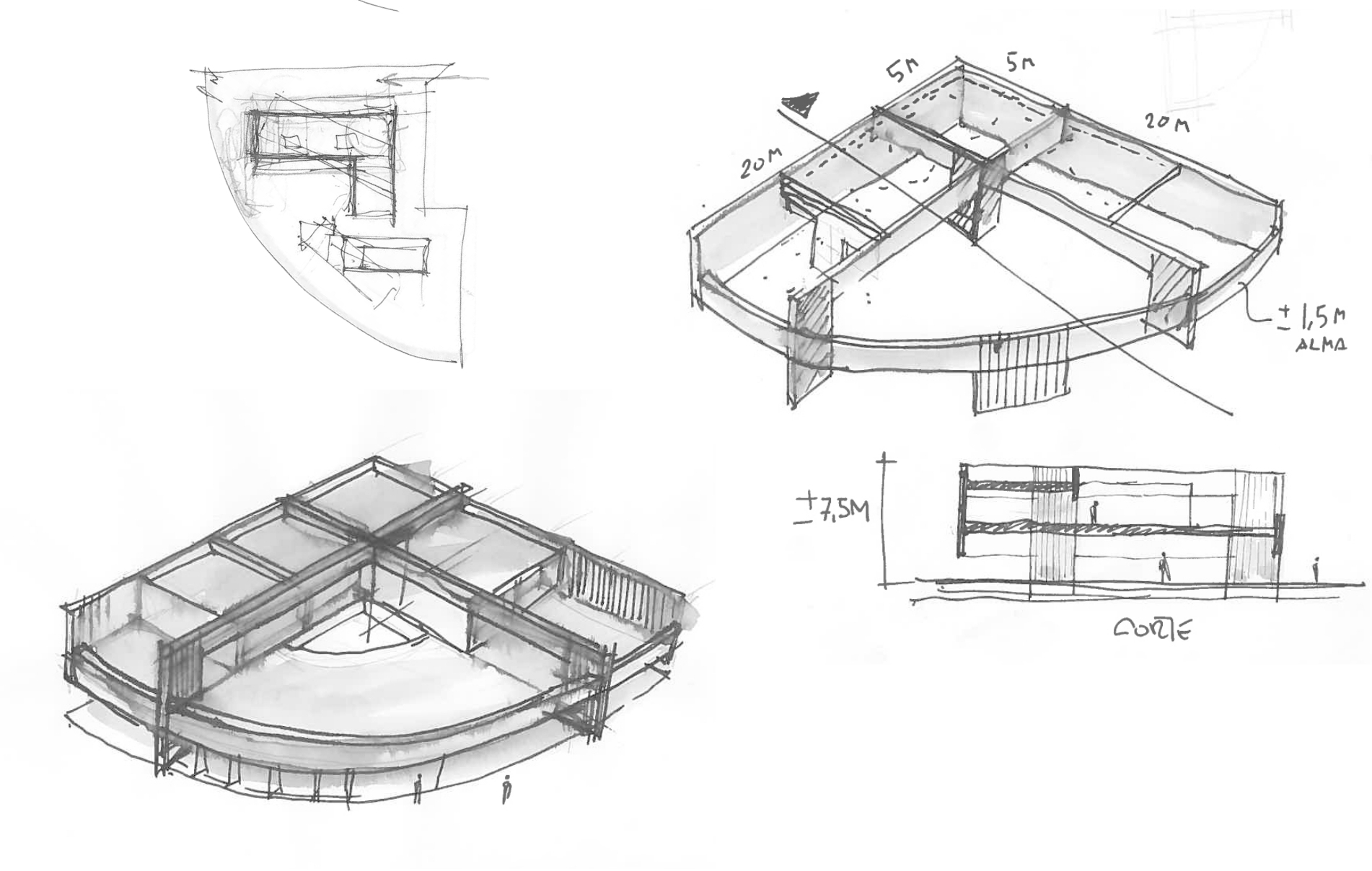
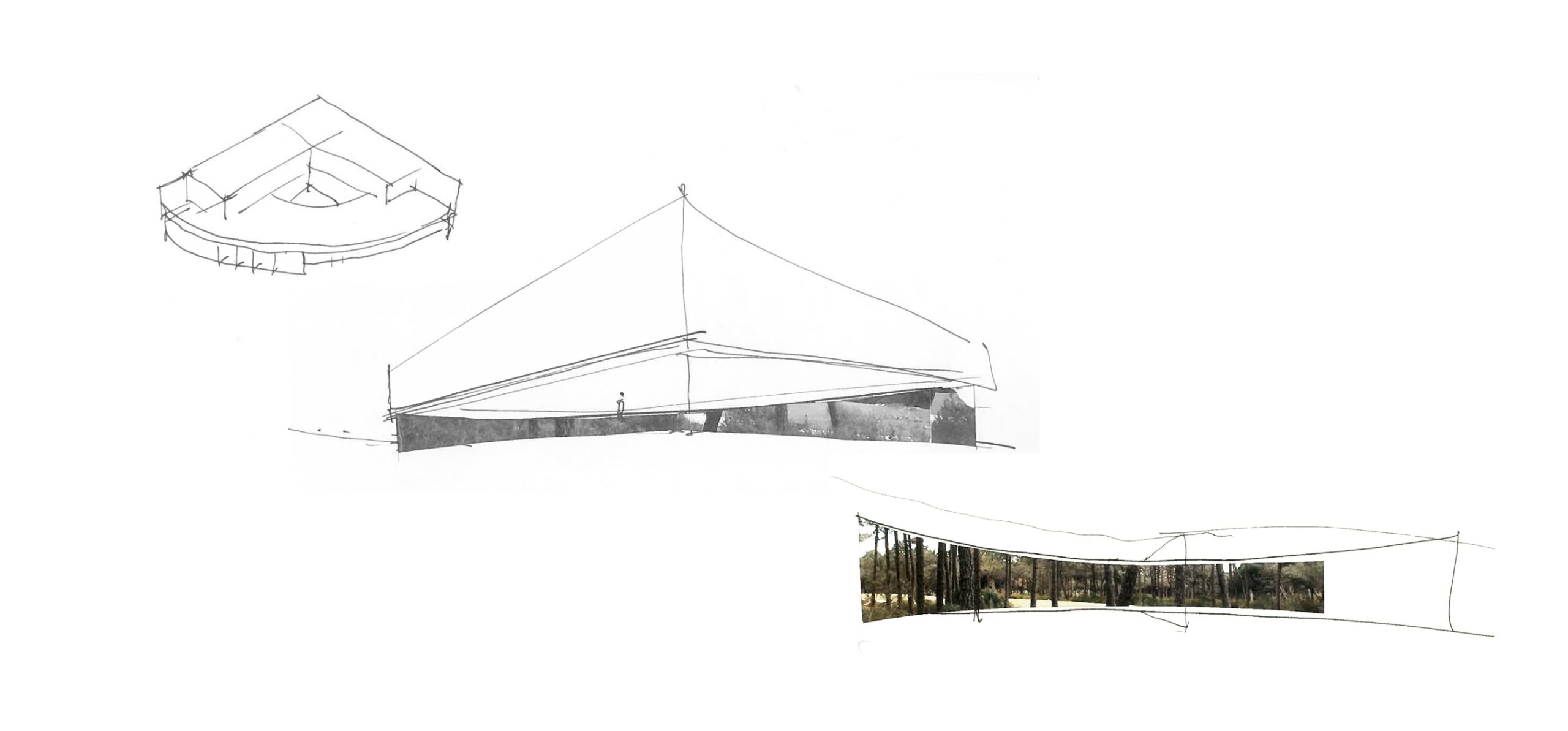
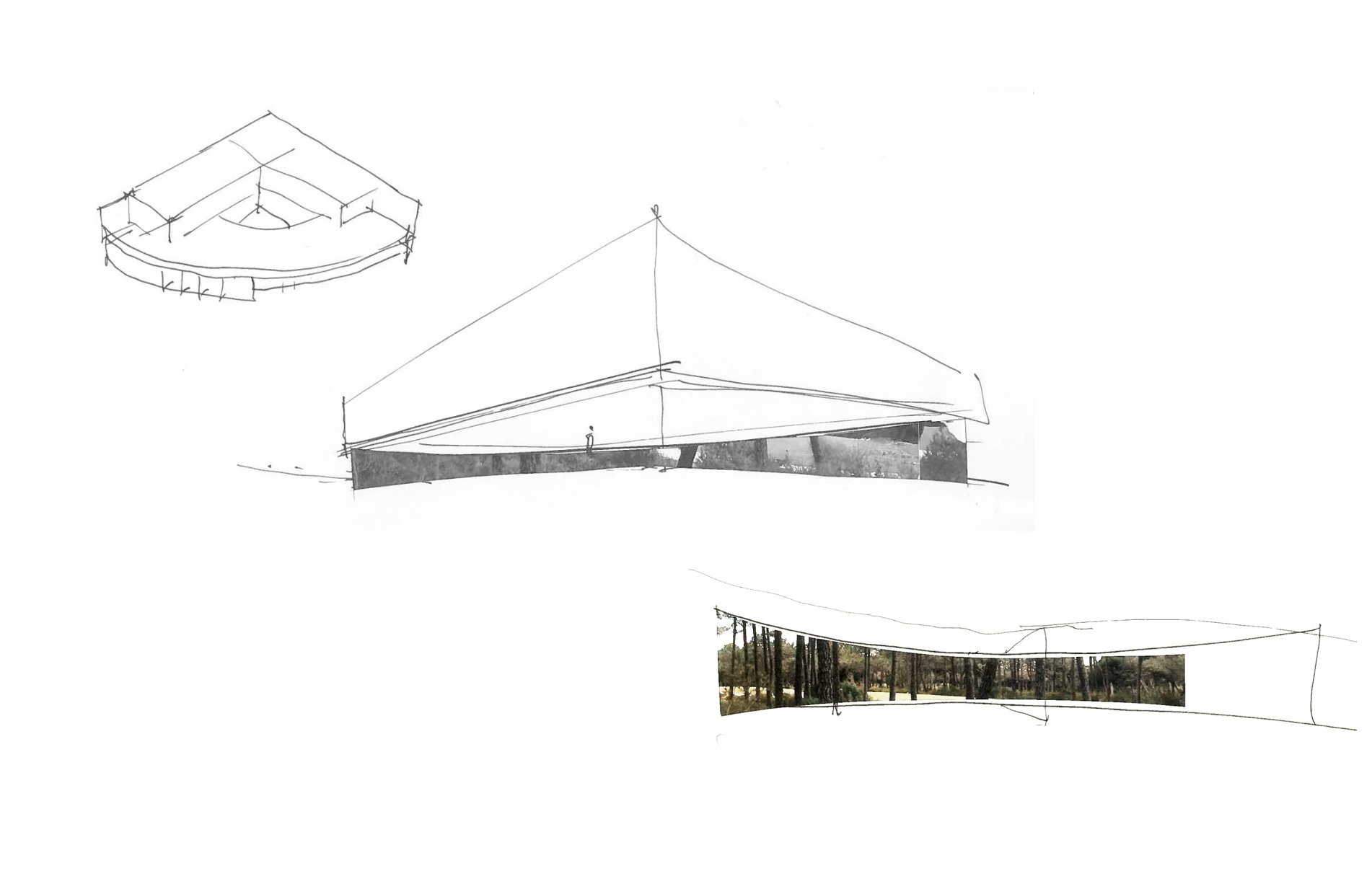
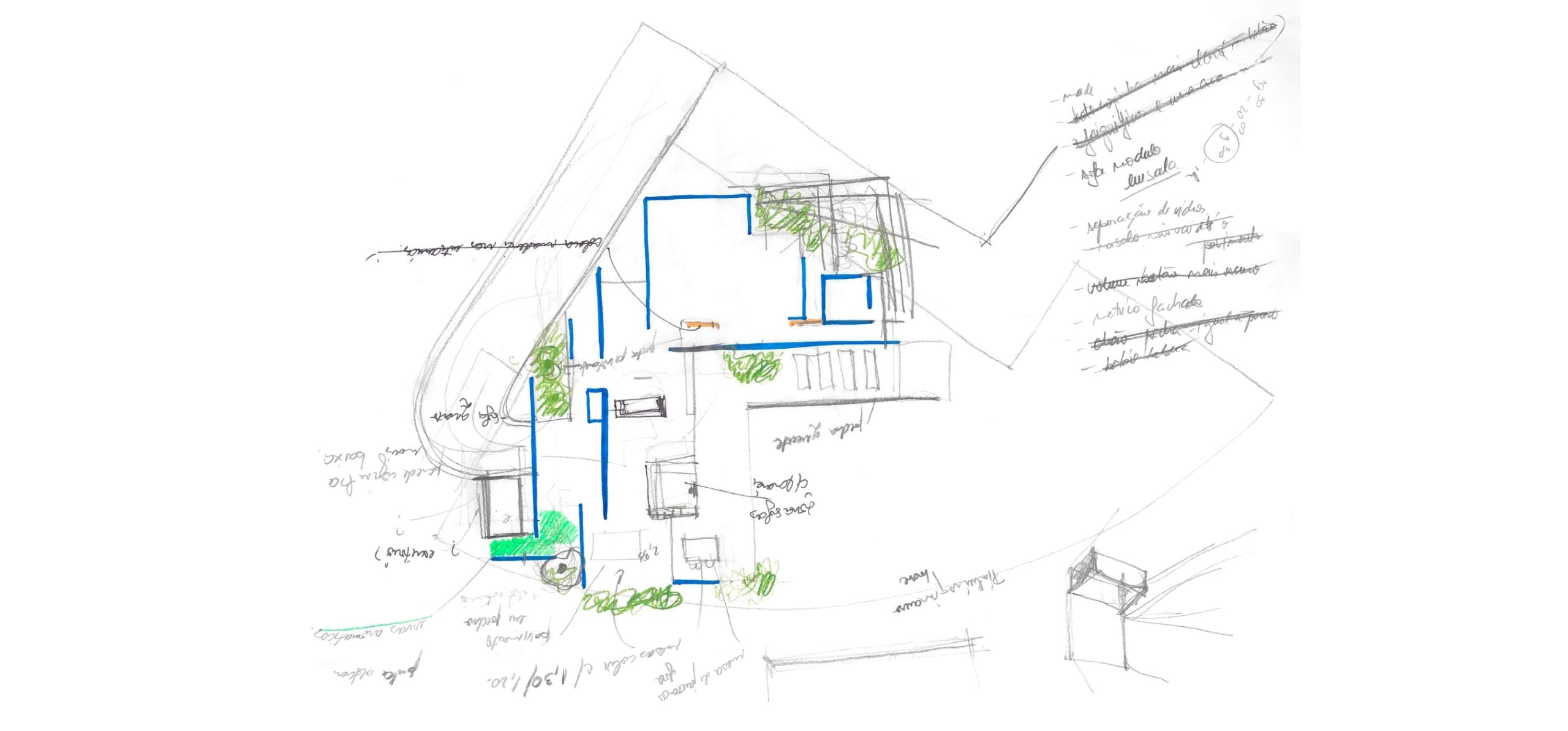
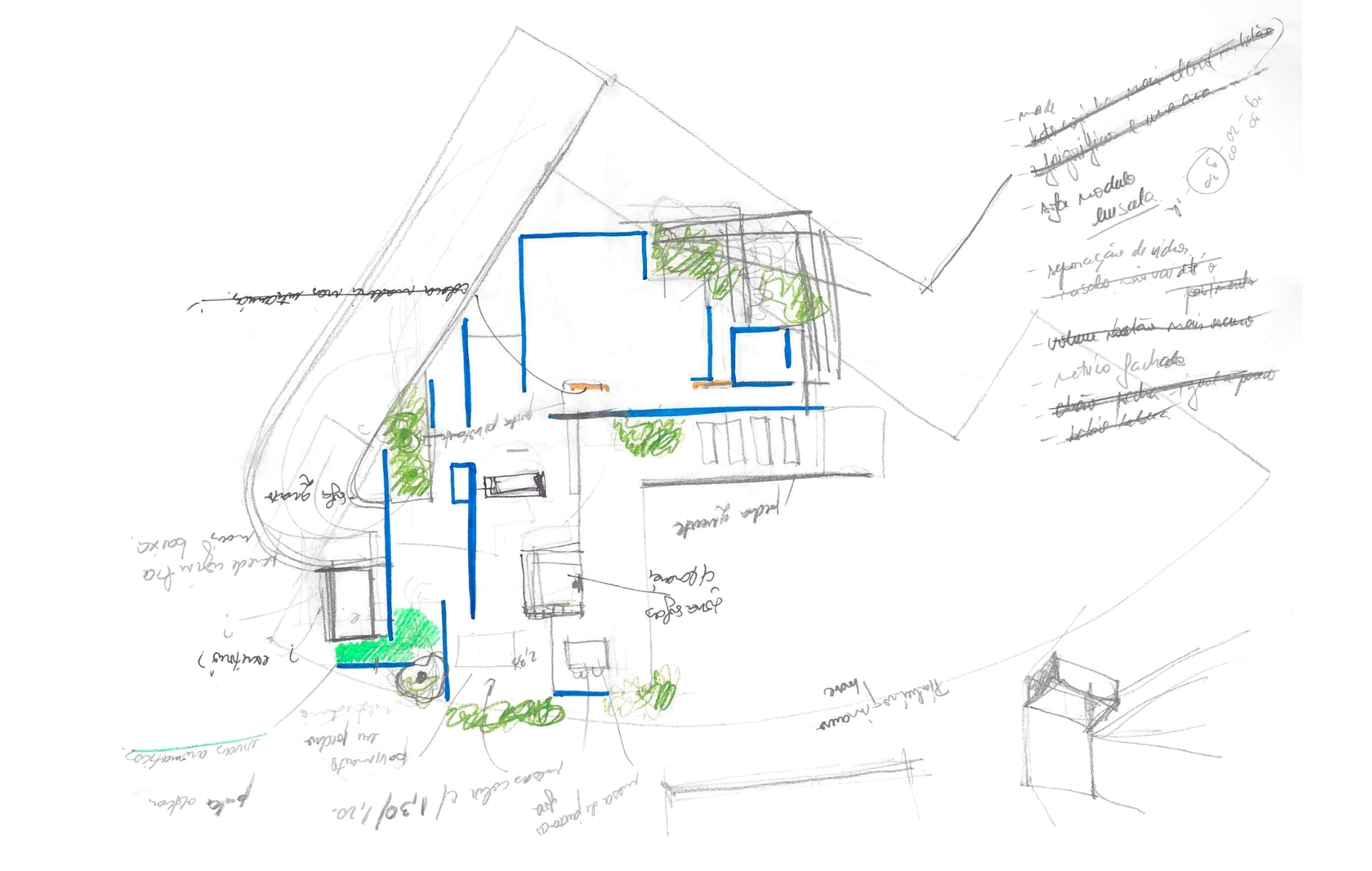
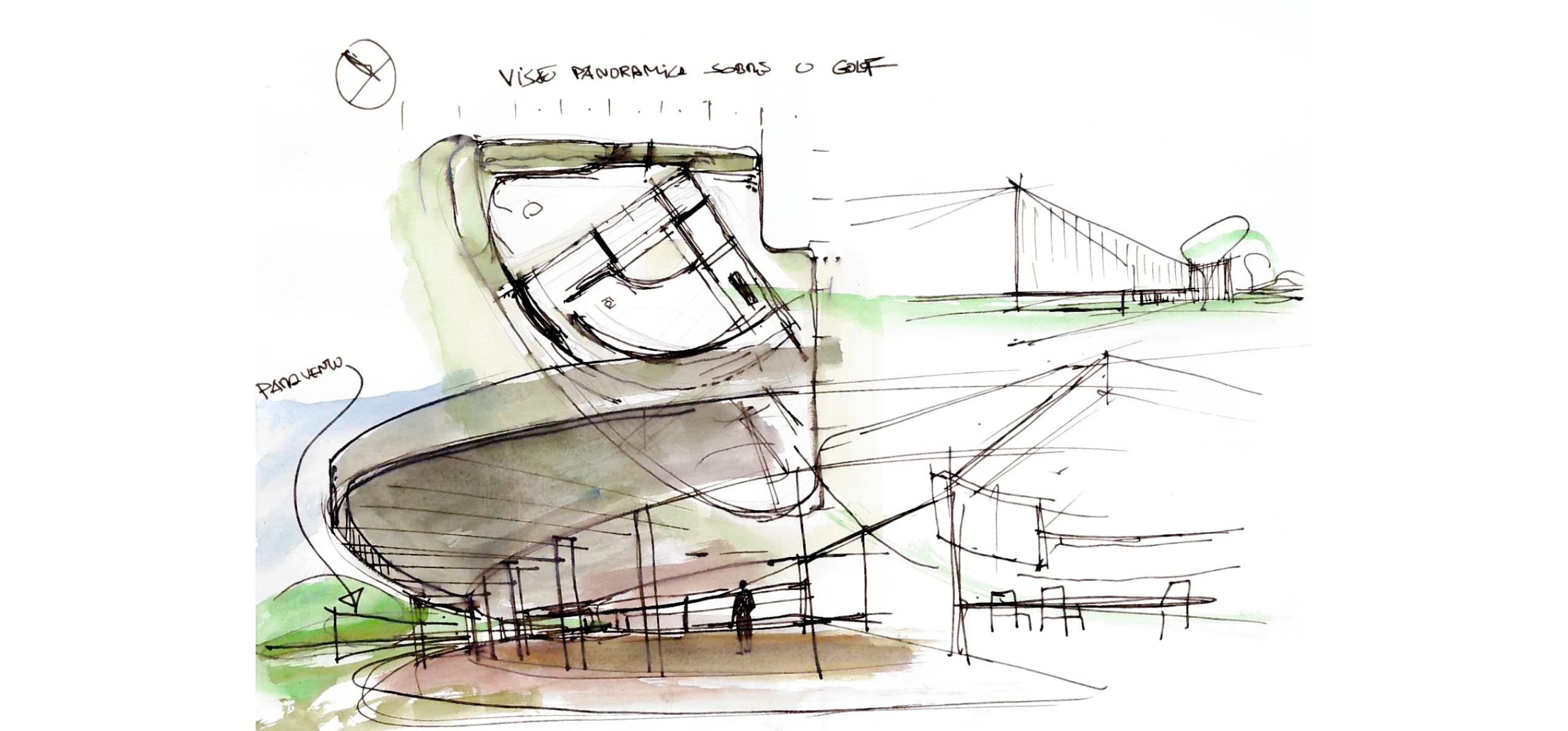
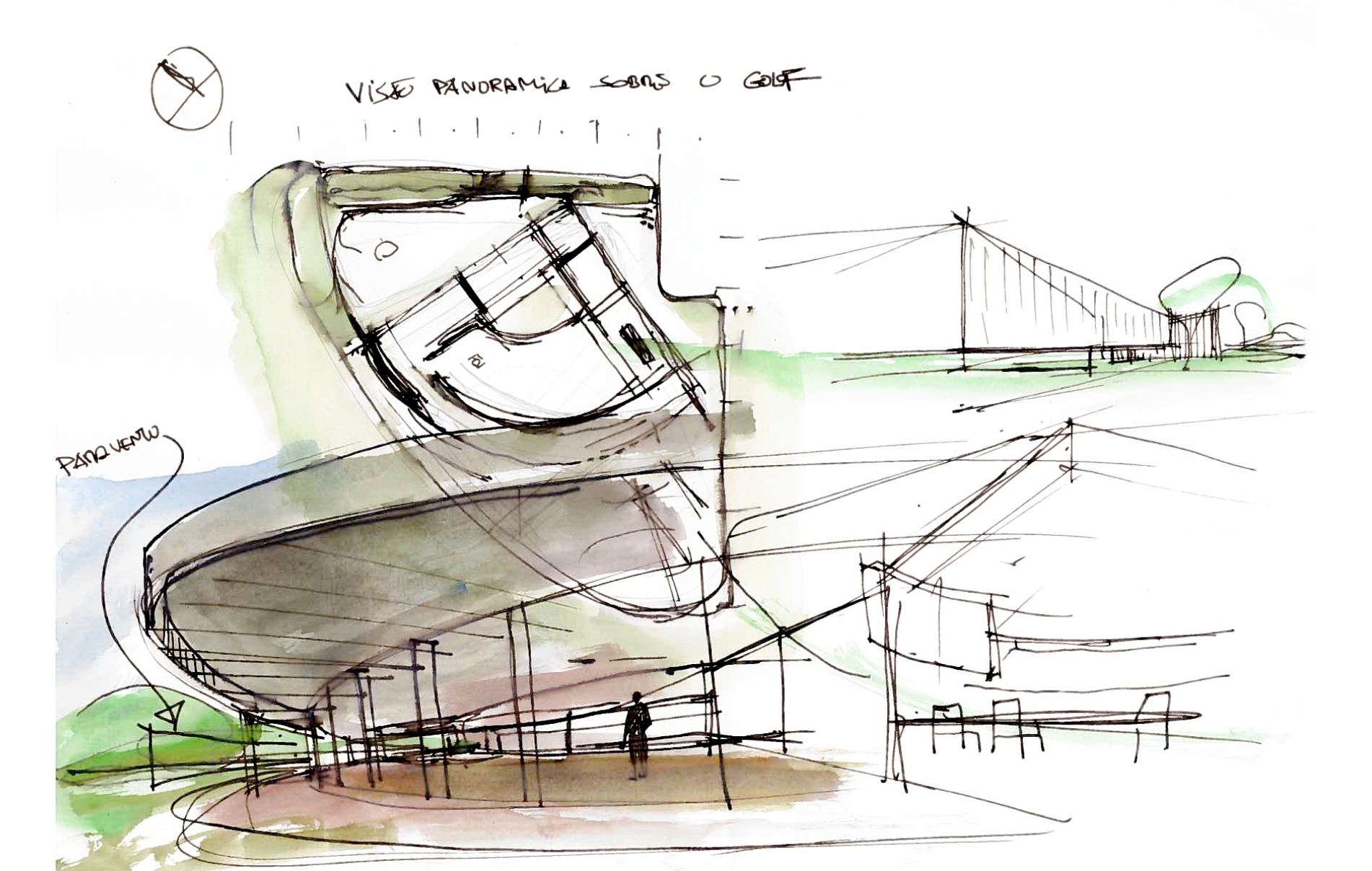
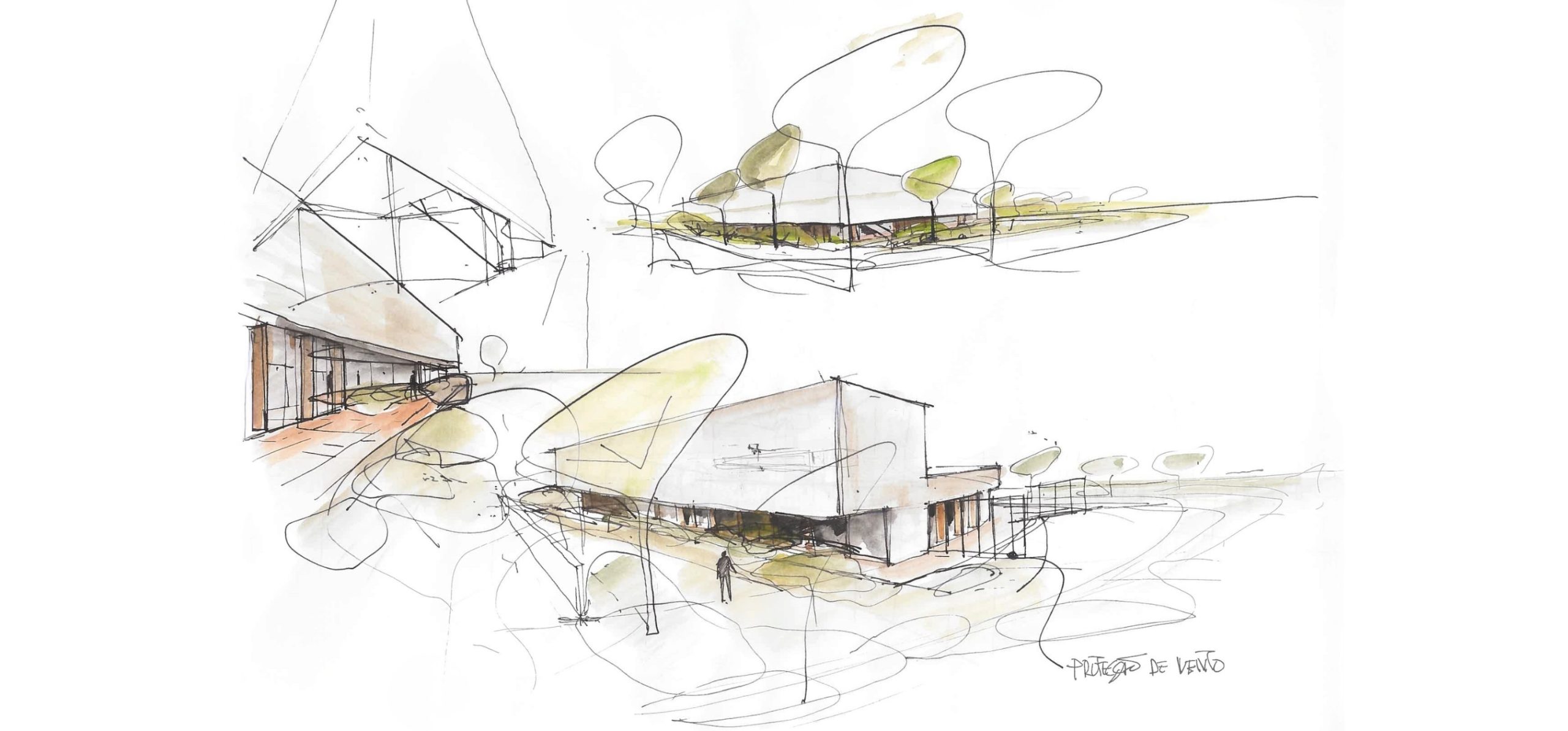
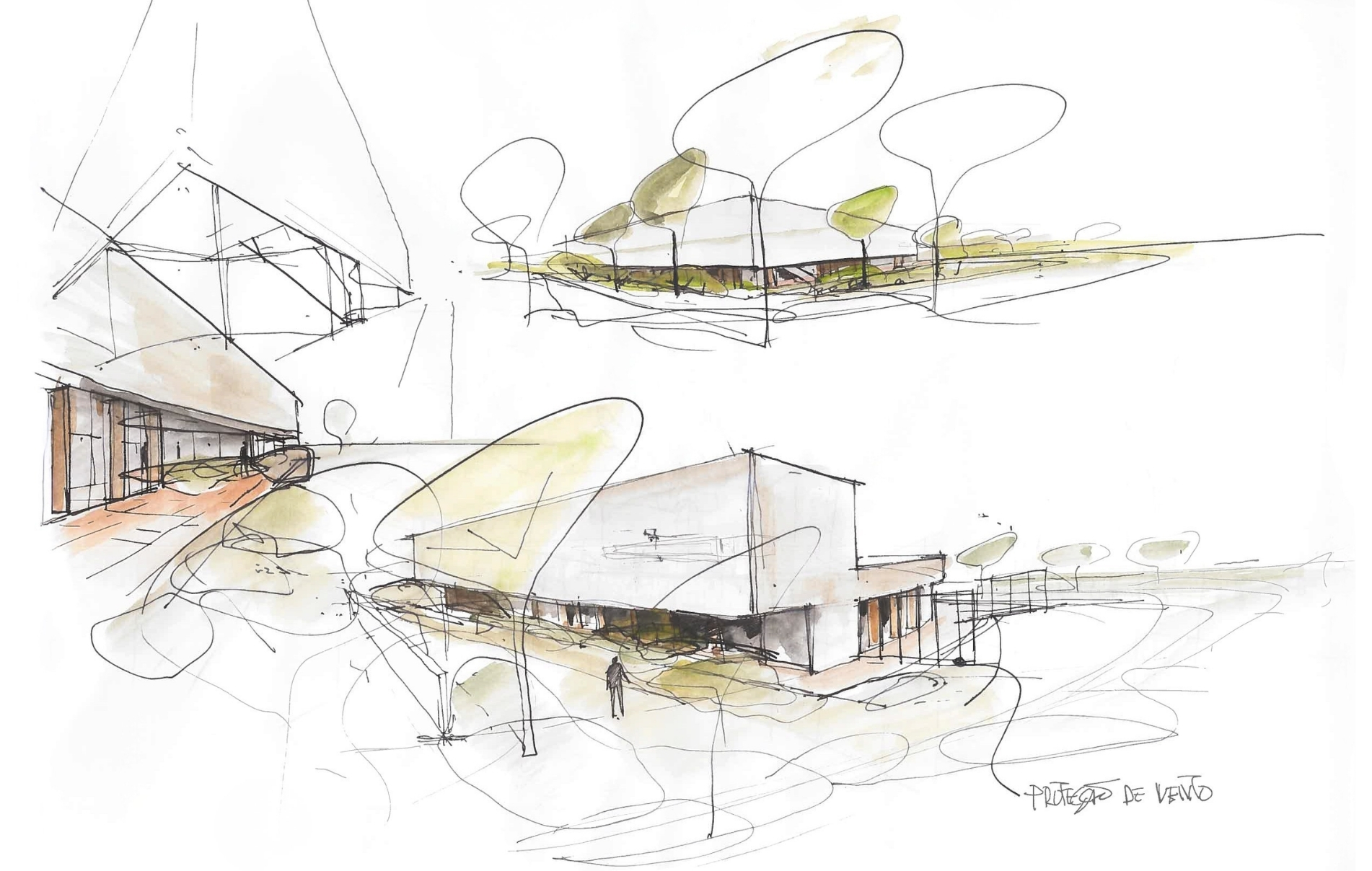
This strategy maximises natural light, privacy and visual continuity with the landscape.
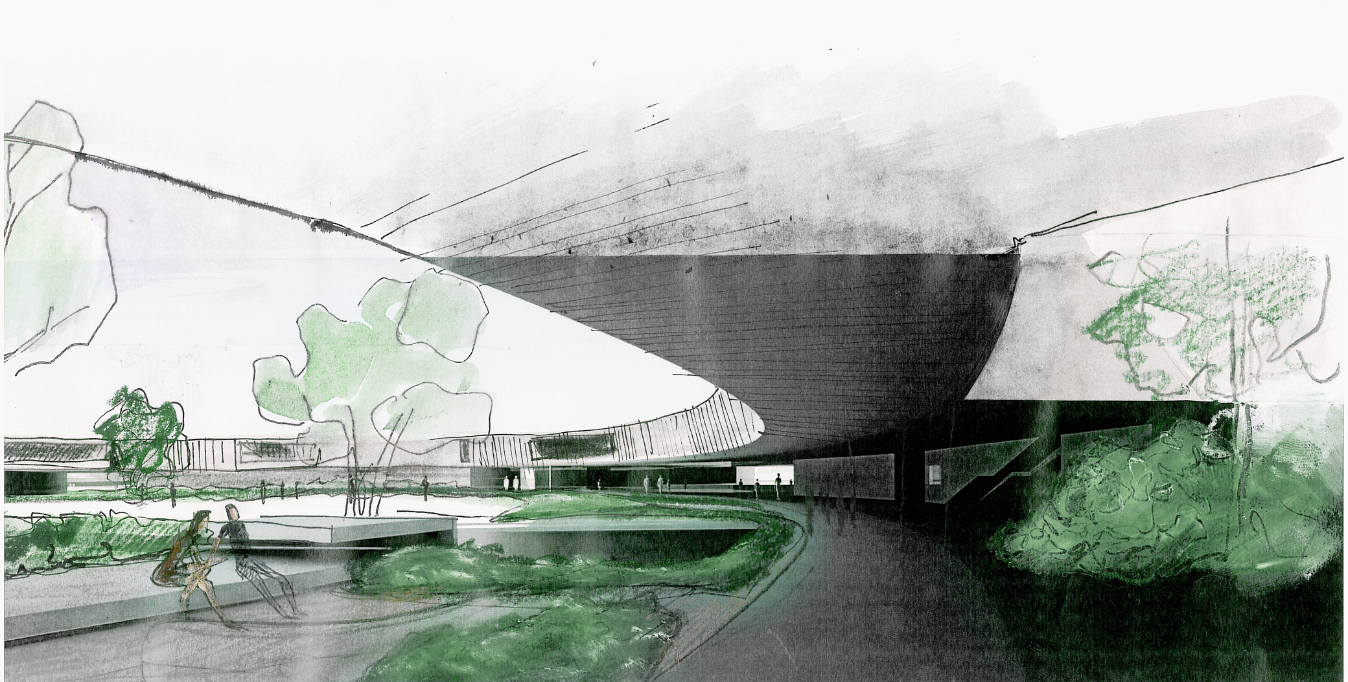
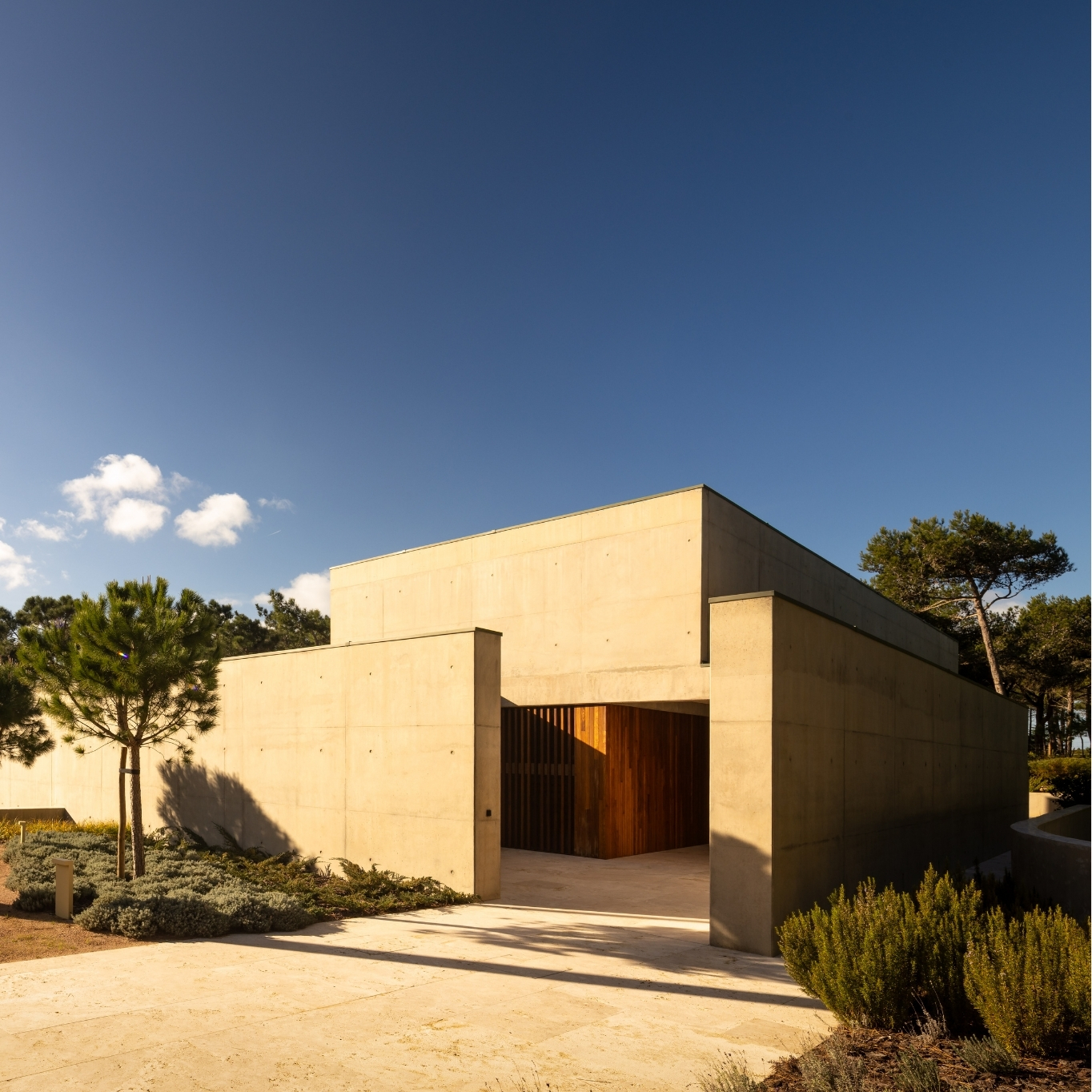
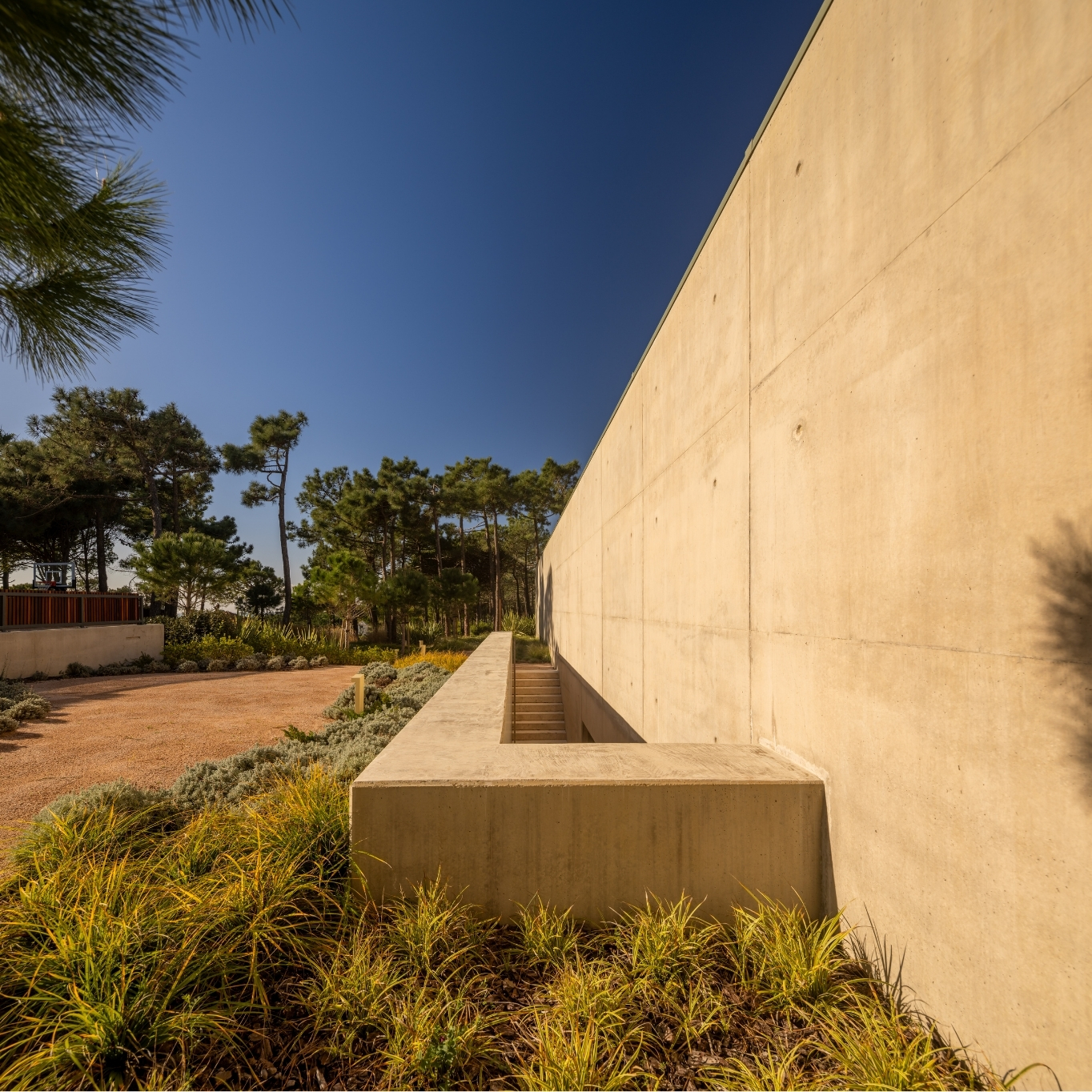
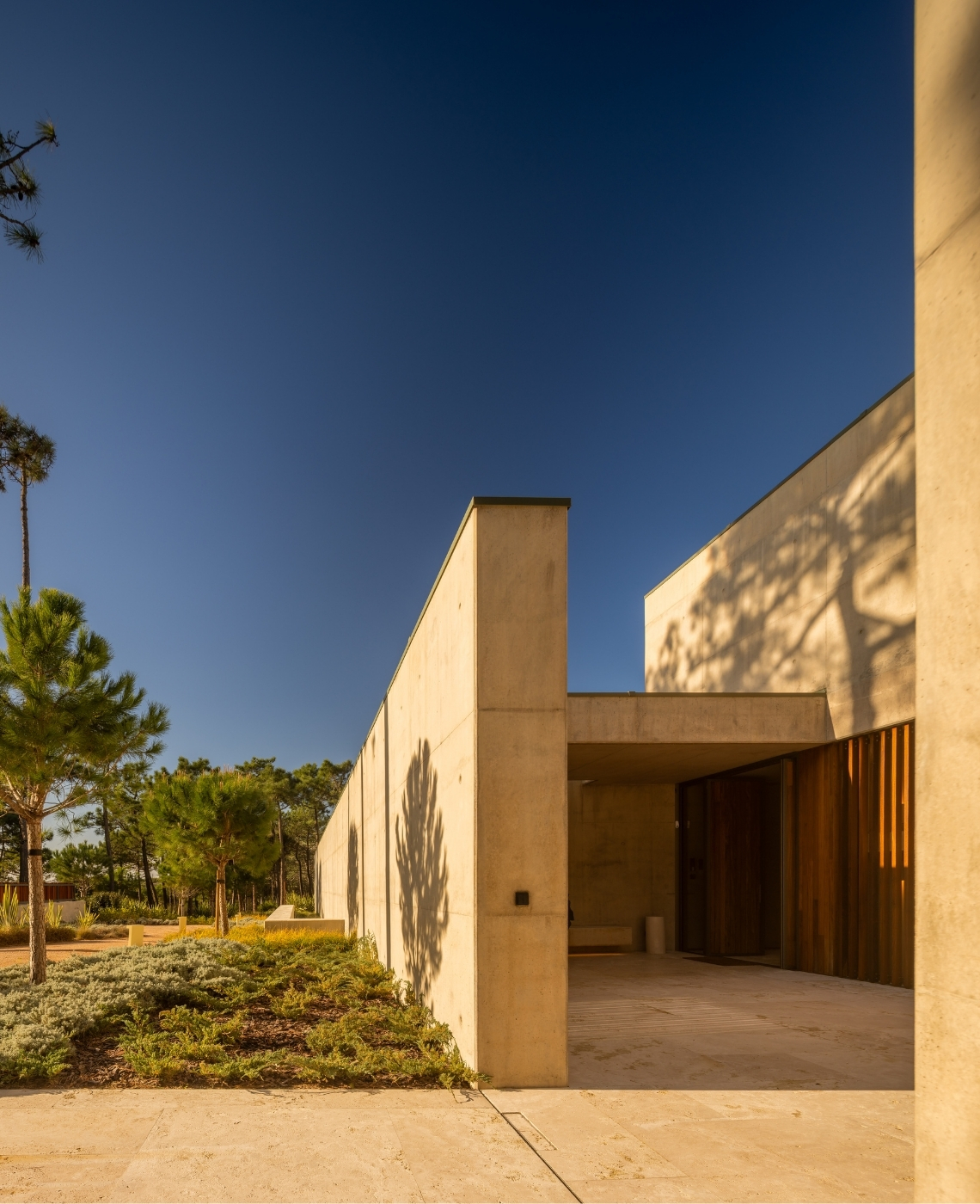
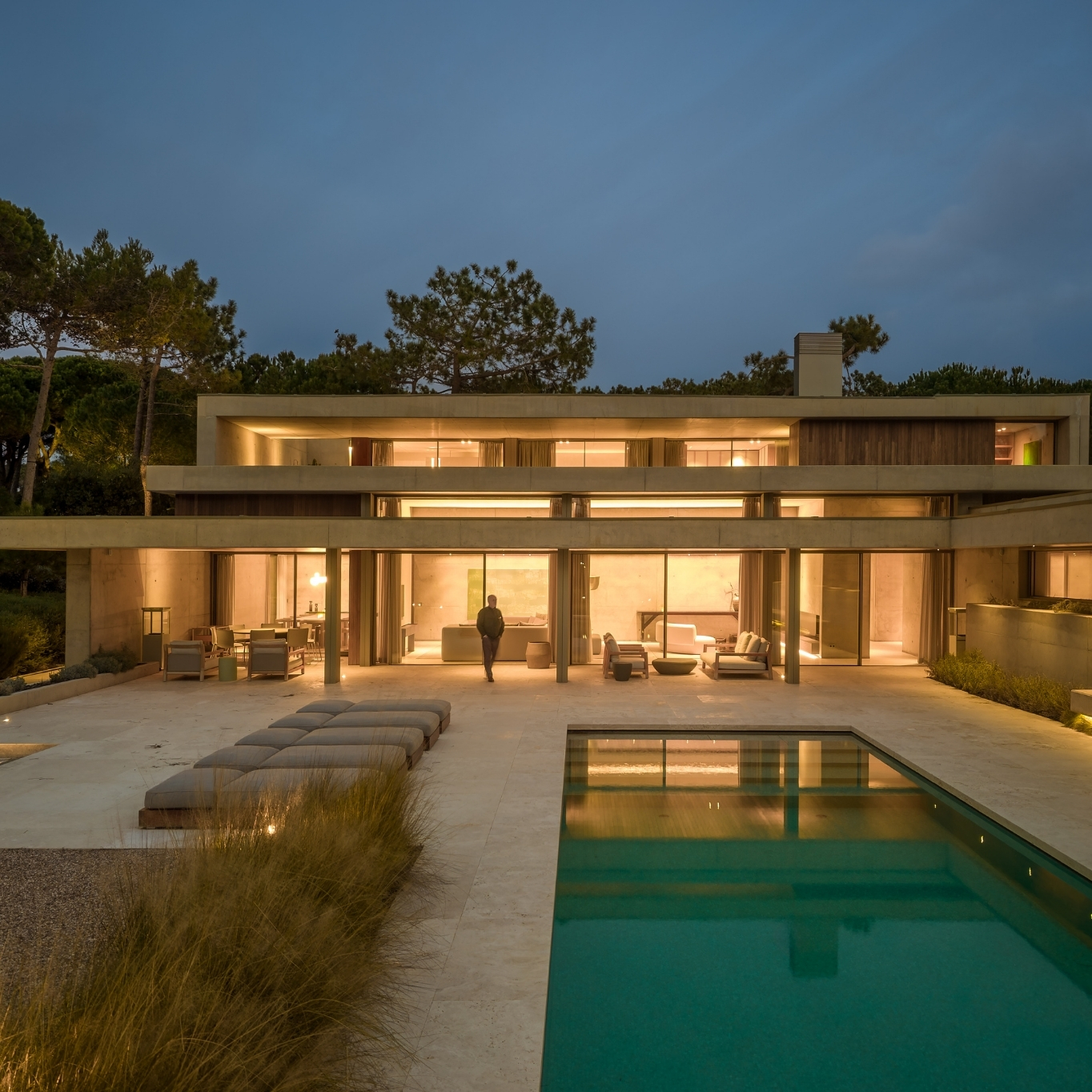
The architecture is defined by a sequence of horizontal planes that organise the building’s volumetry and create a clear relationship between solid and void.
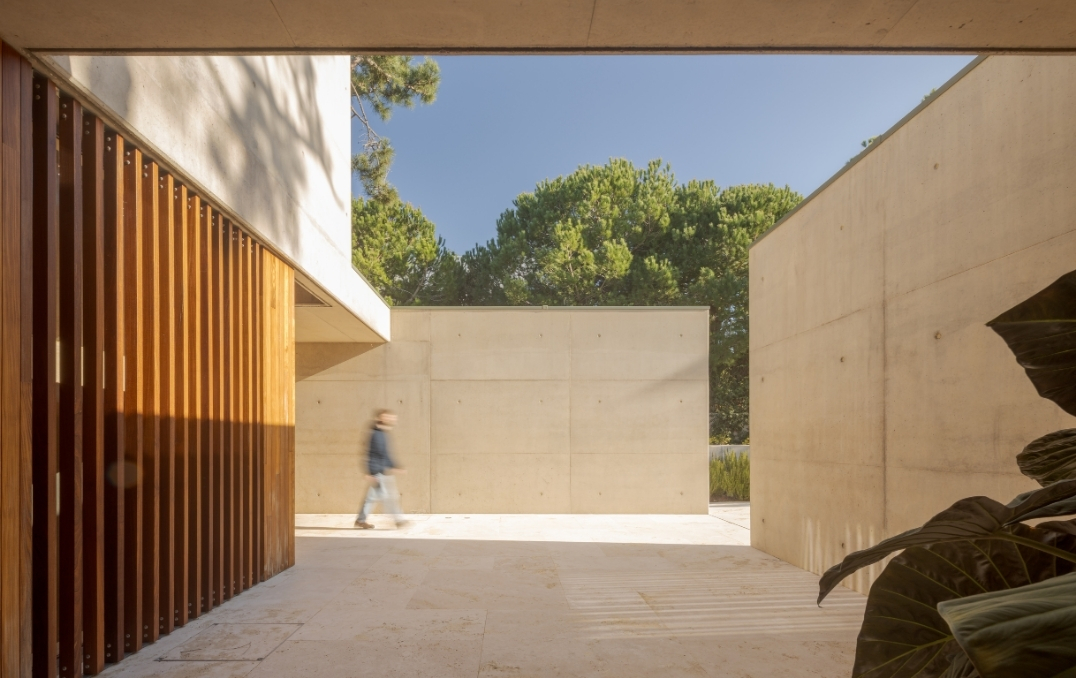
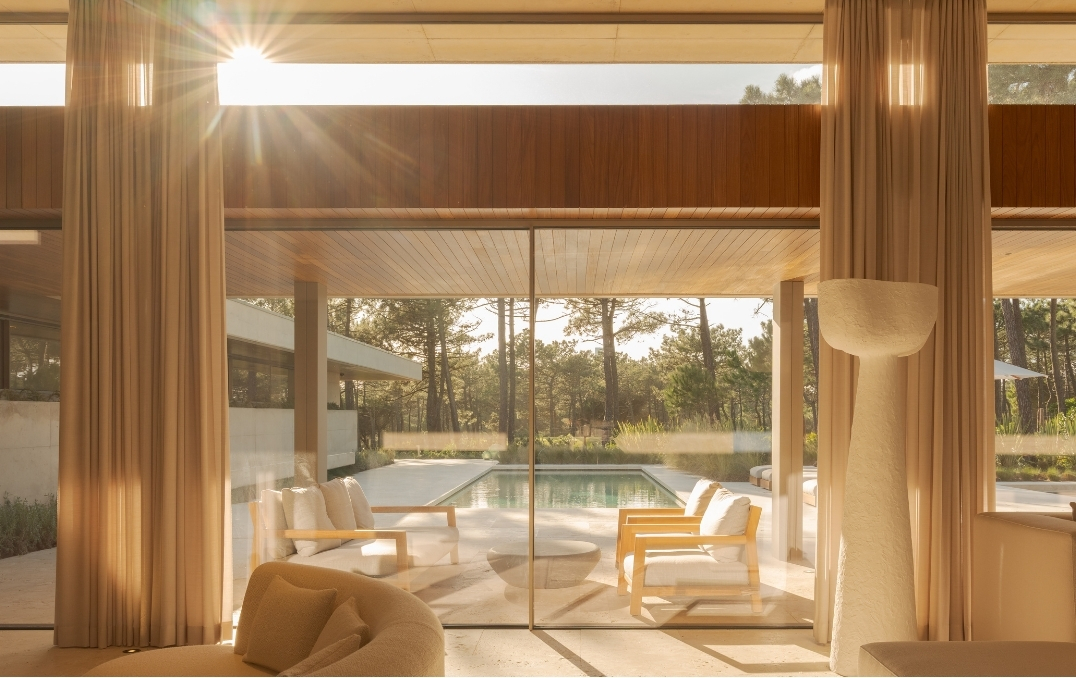
Recessed façades introduce shadow and depth, softening the perception of mass and bringing rhythm to the composition. The project balances more enclosed surfaces with generous glazed openings, allowing a continuous dialogue between interior and exterior spaces.
The internal layout is organised through a clear distinction between social and private areas.
The living spaces are open and fluid, extending naturally towards the exterior through terraces and large glazed openings. In contrast, the bedroom areas are more contained and organised around private courtyards, ensuring both privacy and natural light.
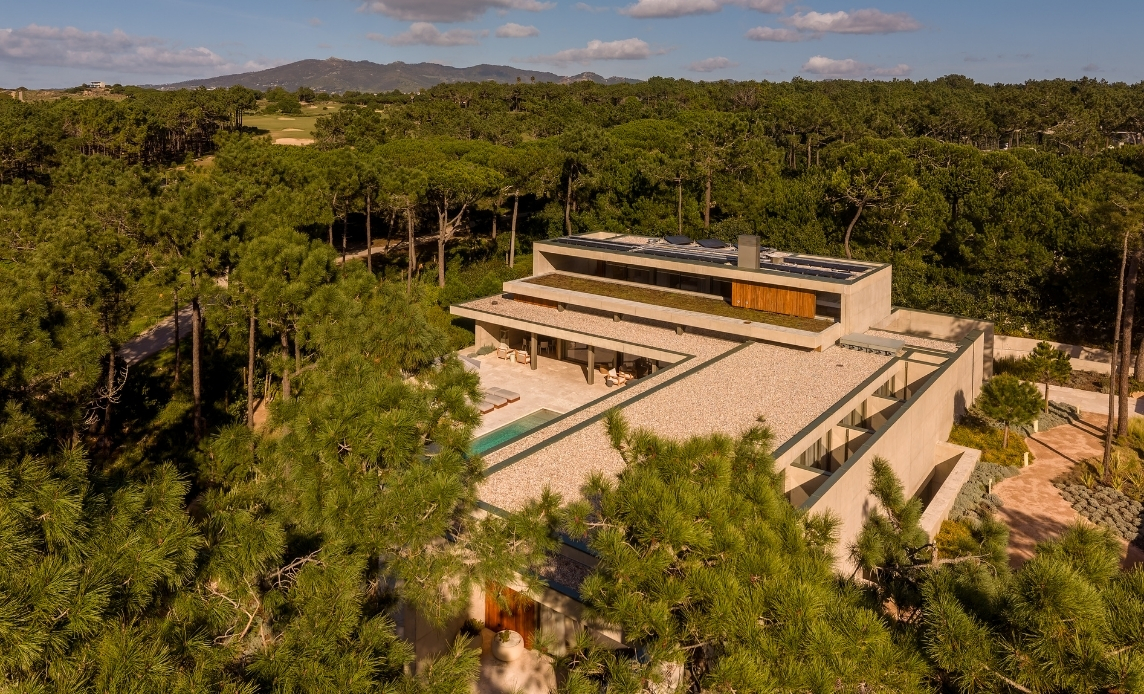
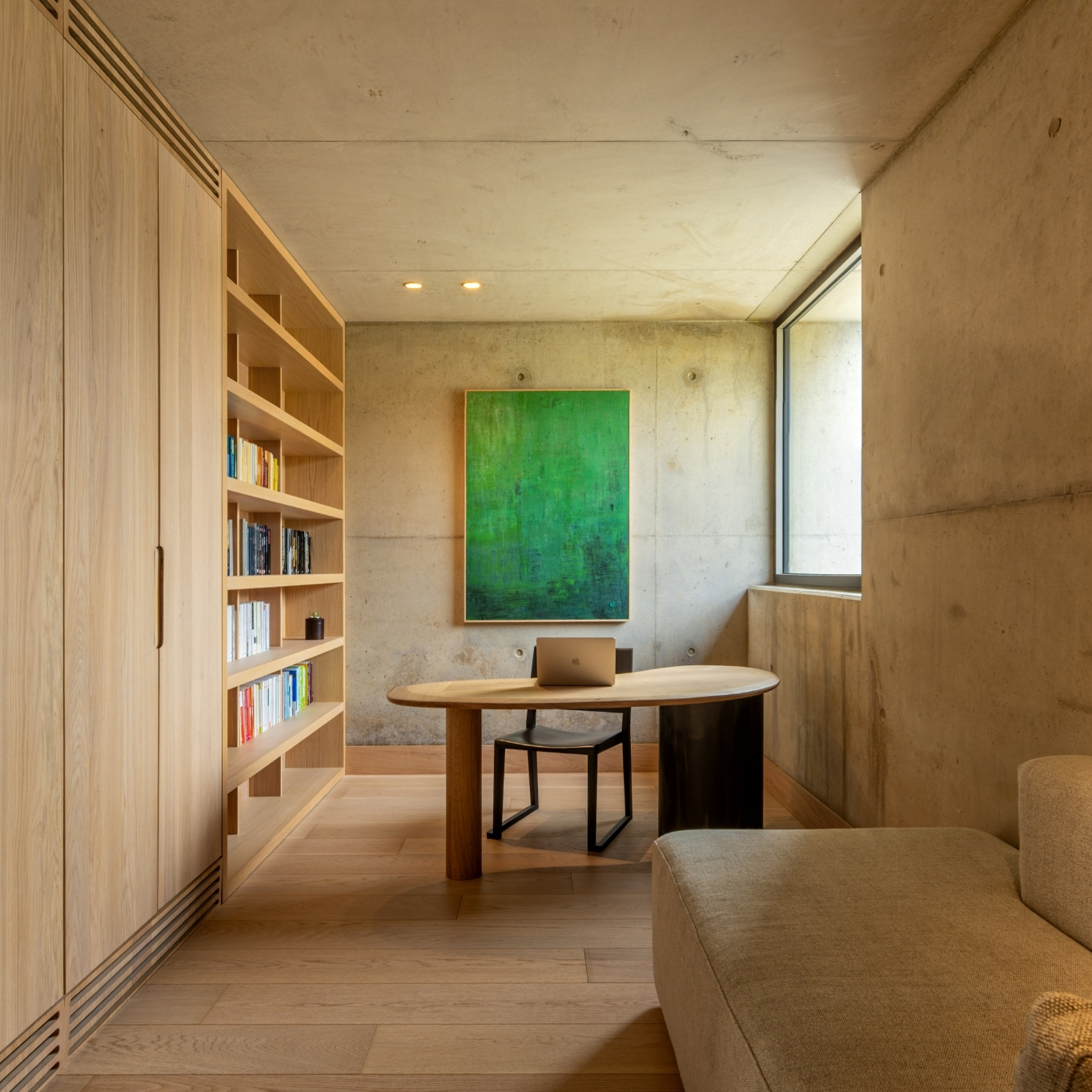
The upper floor accommodates the master suite and office, both connected to a covered terrace overlooking the surrounding landscape.
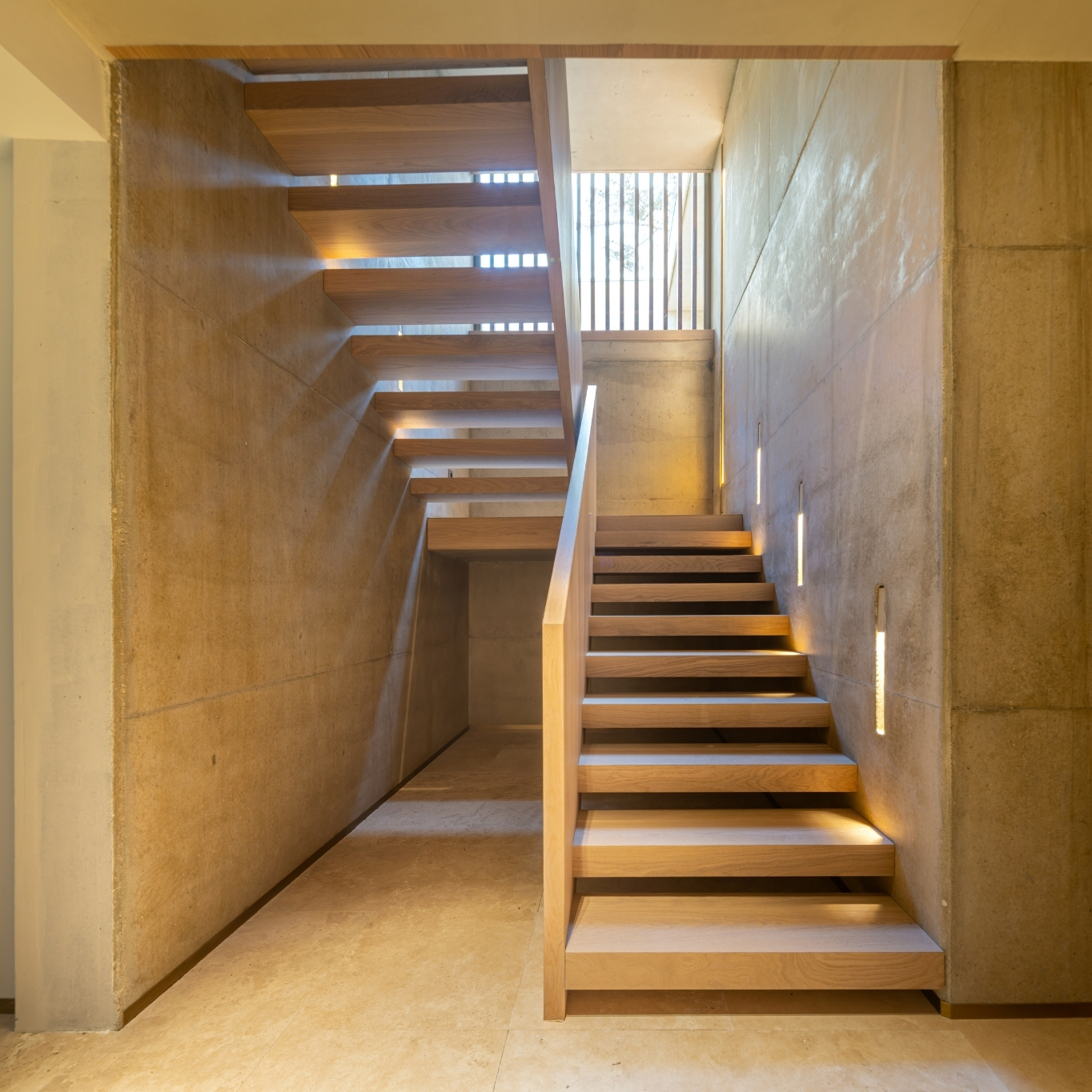
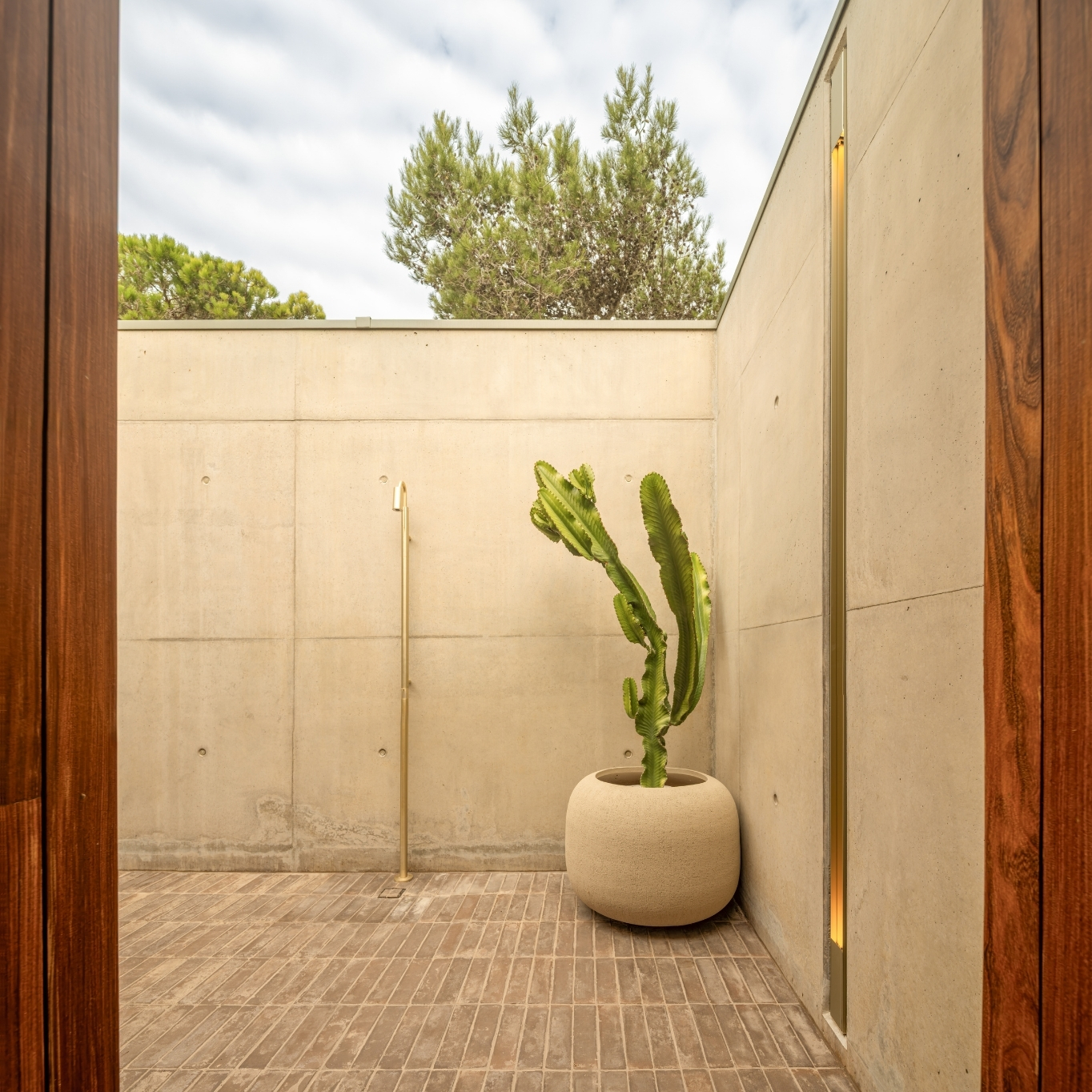
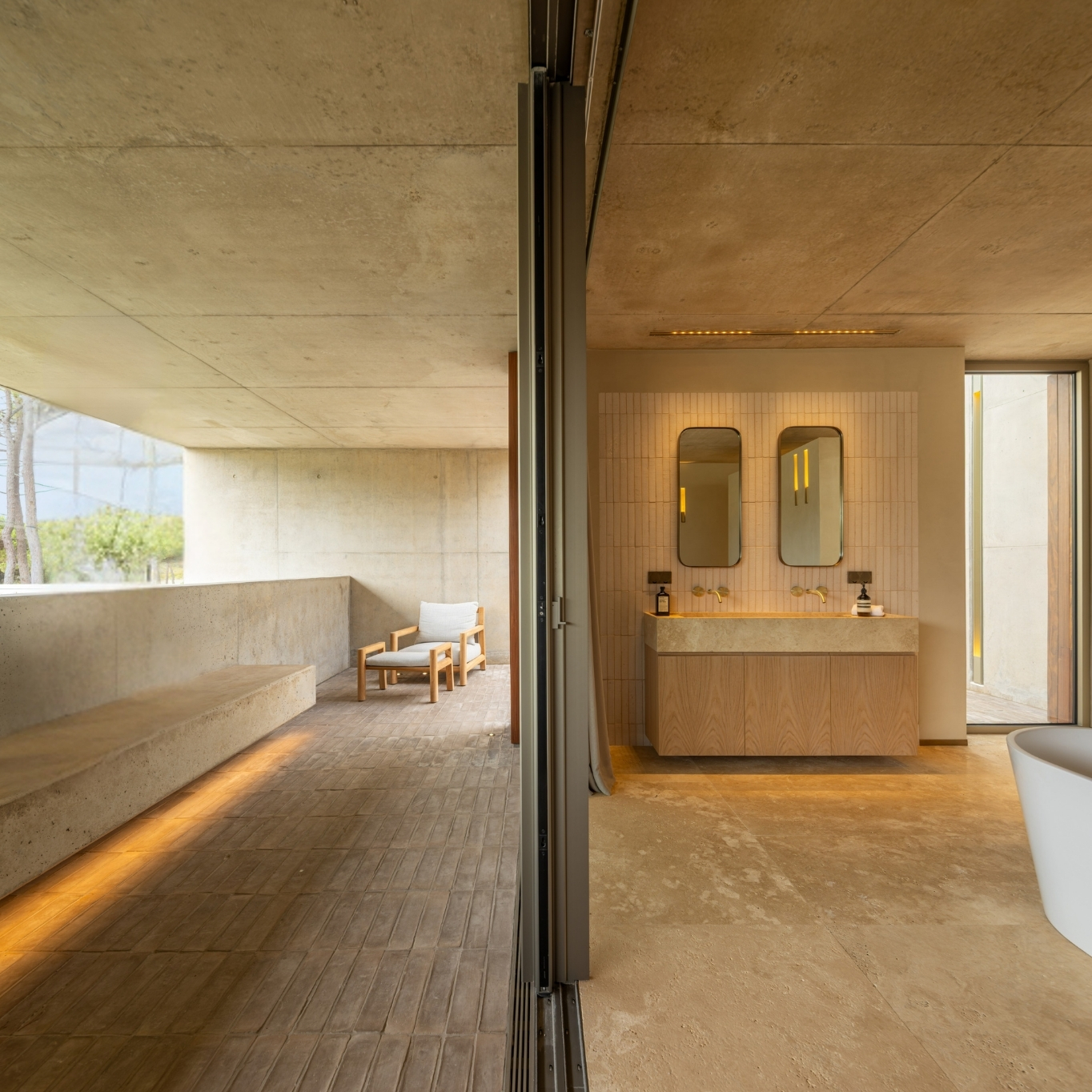
The basement integrates parking and technical areas, with natural light introduced through strategically positioned patios. This approach enhances environmental performance while maintaining spatial quality across all levels.
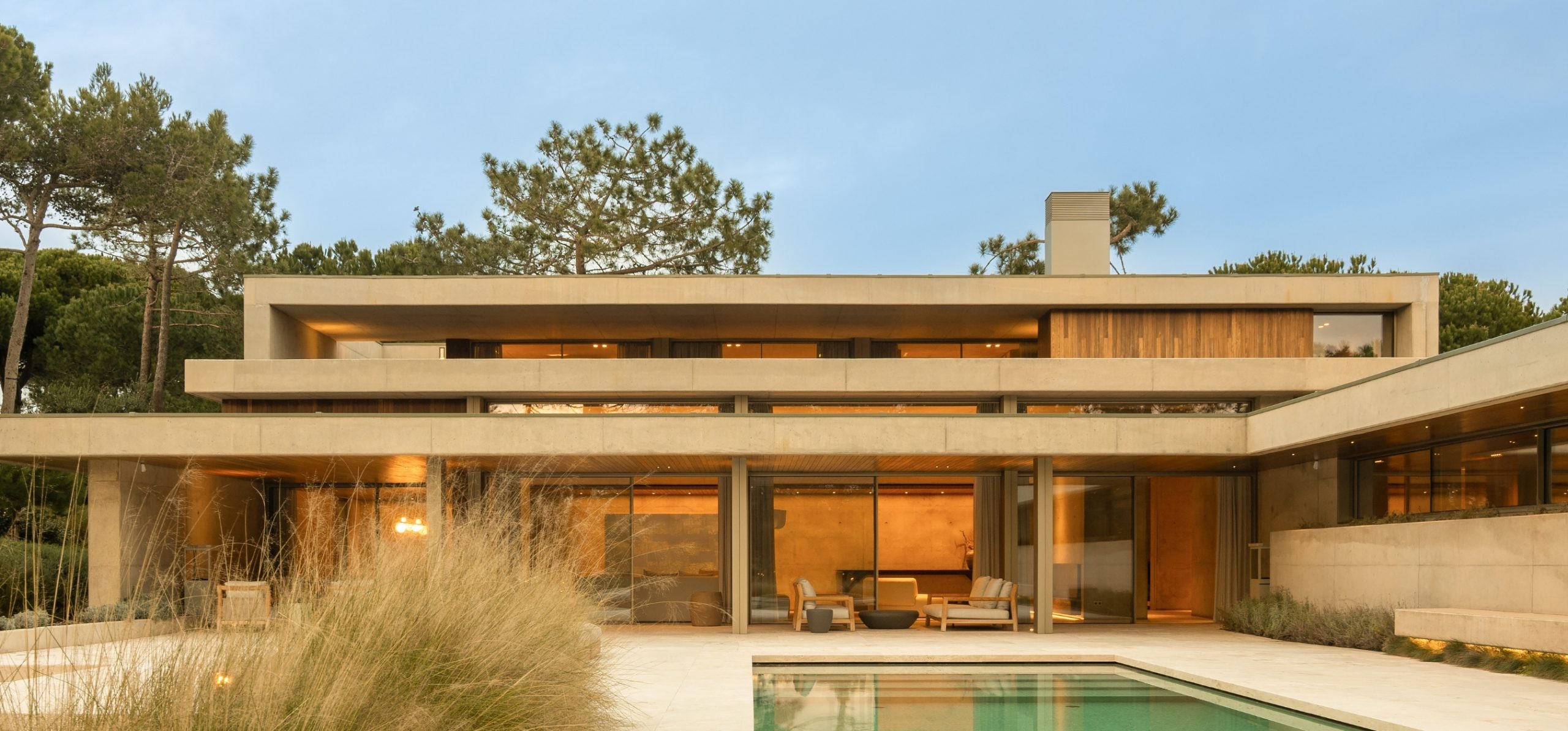
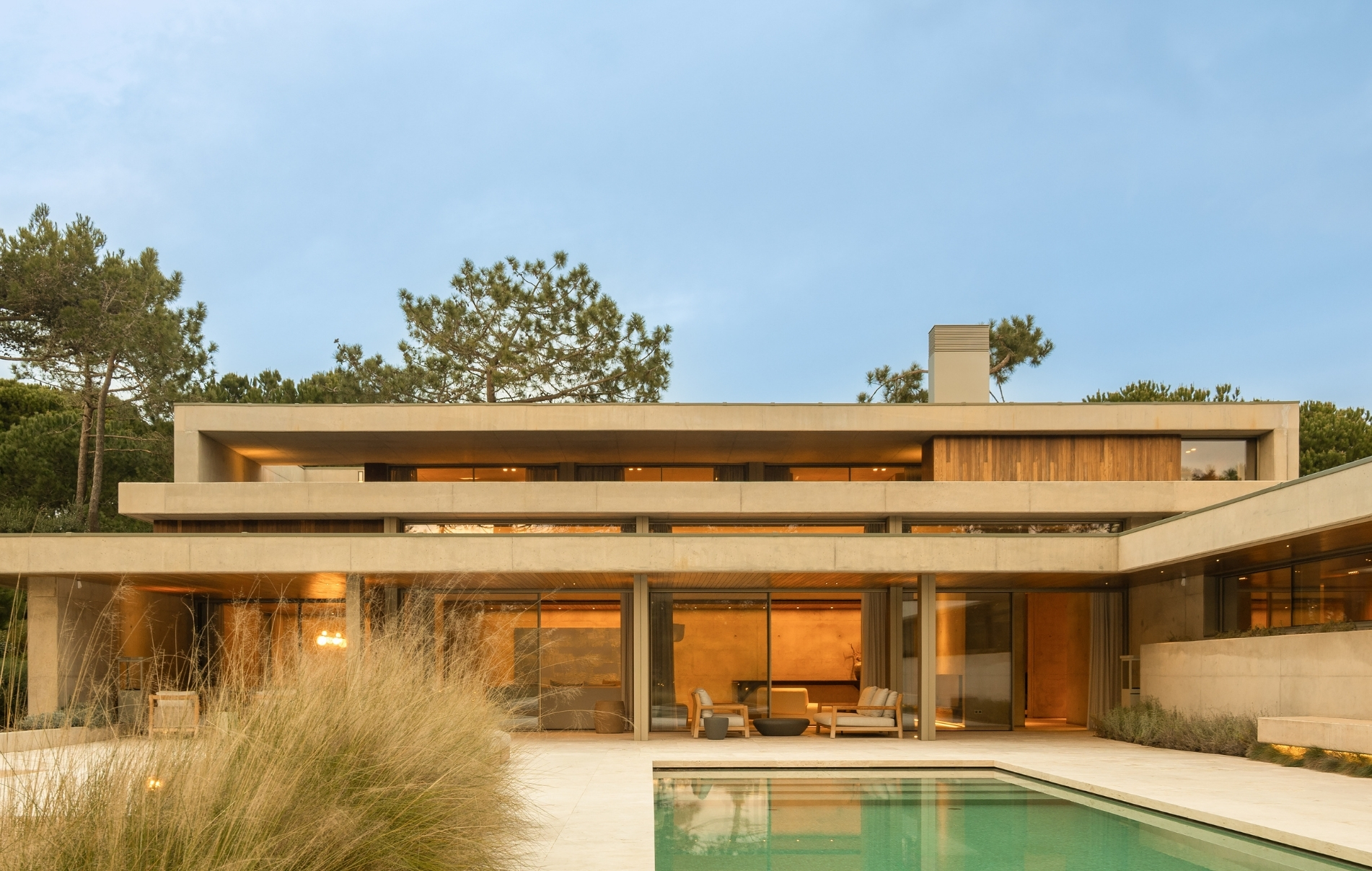
Material expression plays a central role in the identity of the project.
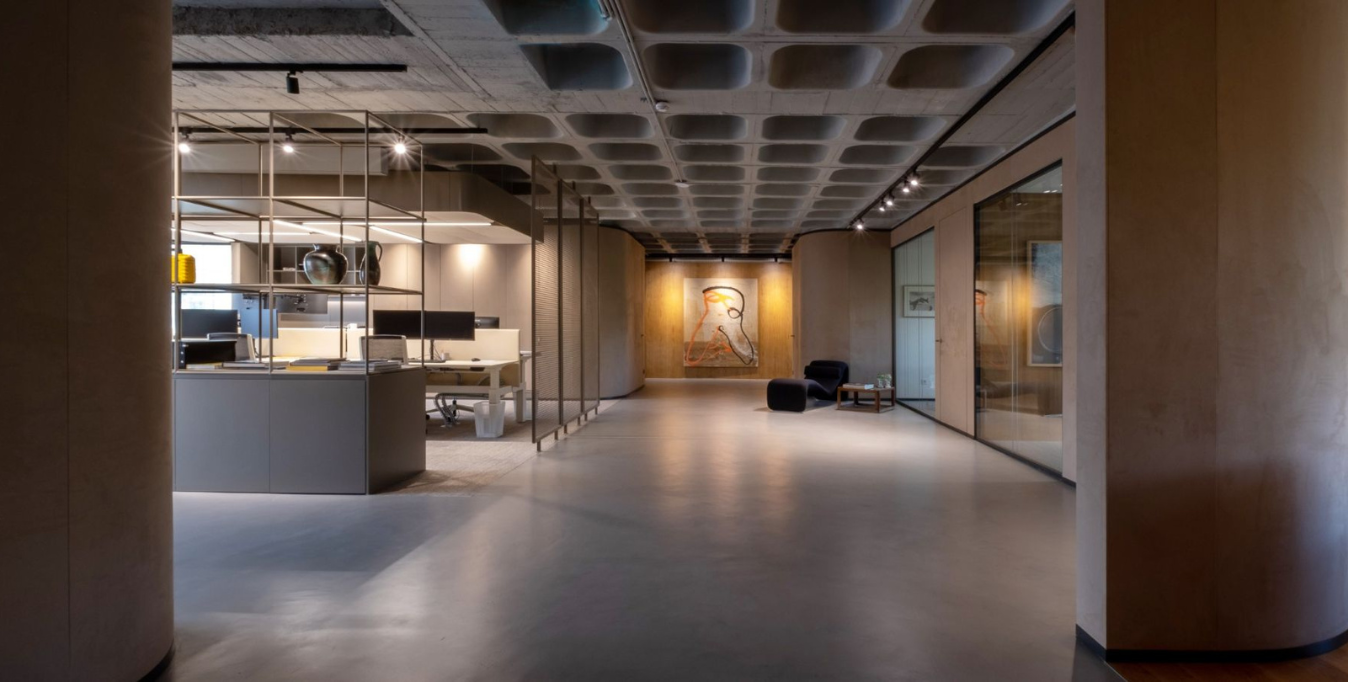
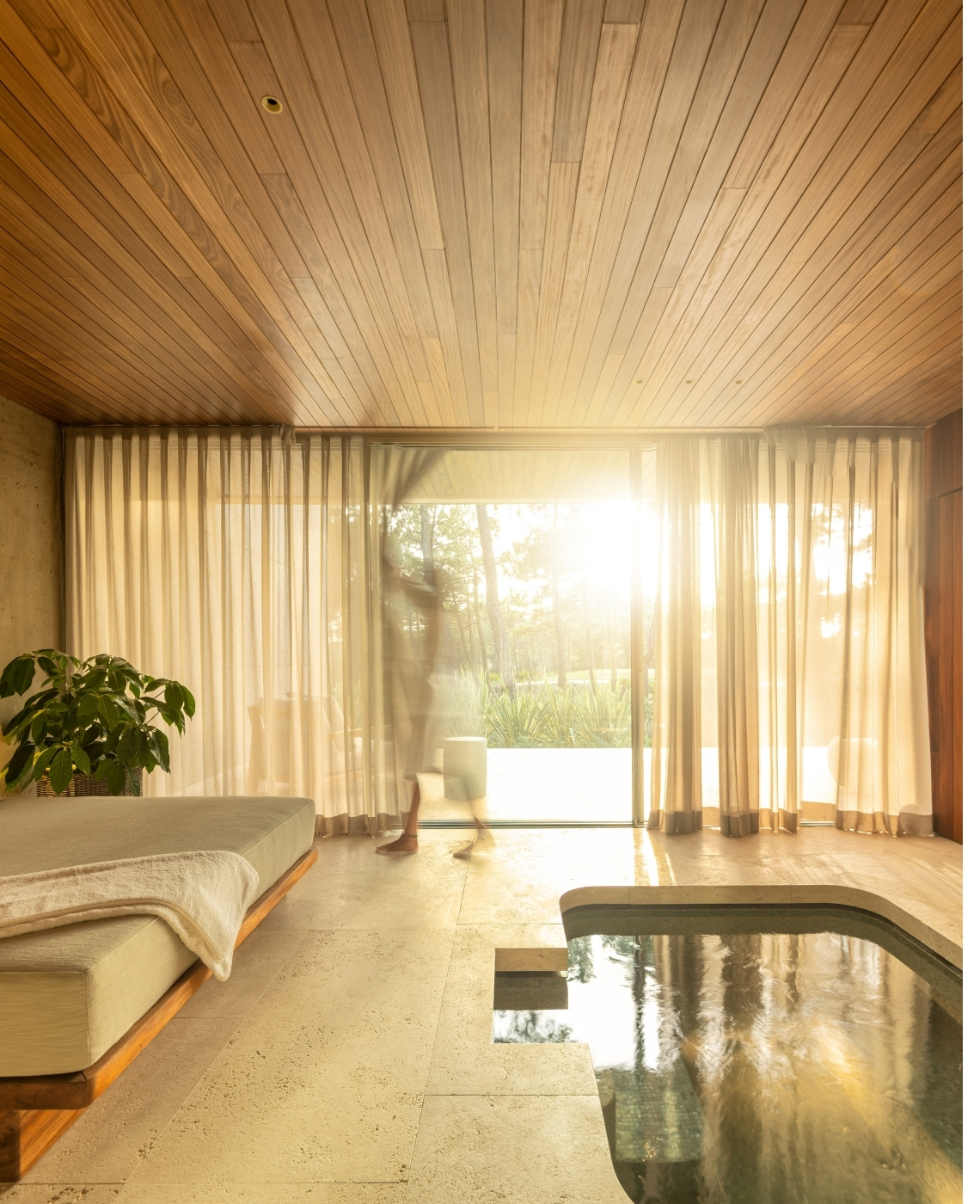
Pigmented exposed concrete defines both structure and character, while timber and mineral stucco introduce warmth and balance. Together, these materials create a cohesive architectural language that is both robust and refined.
A house that protects, opens and responds to its context
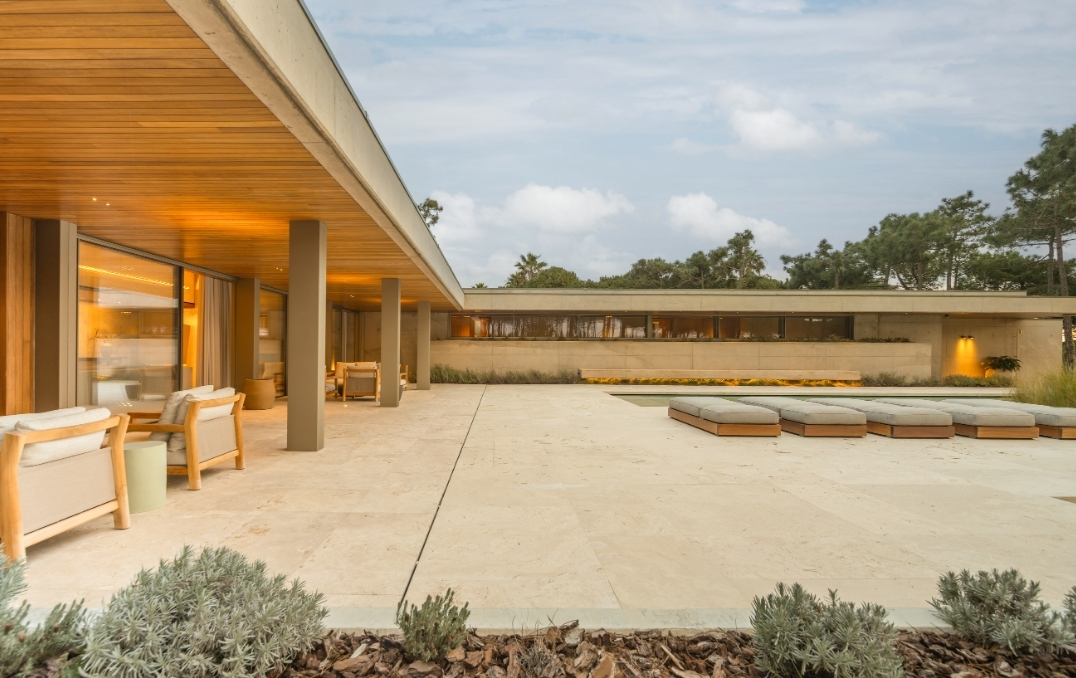
The landscape strategy prioritises the preservation of existing vegetation and the use of native species suited to the local climate.
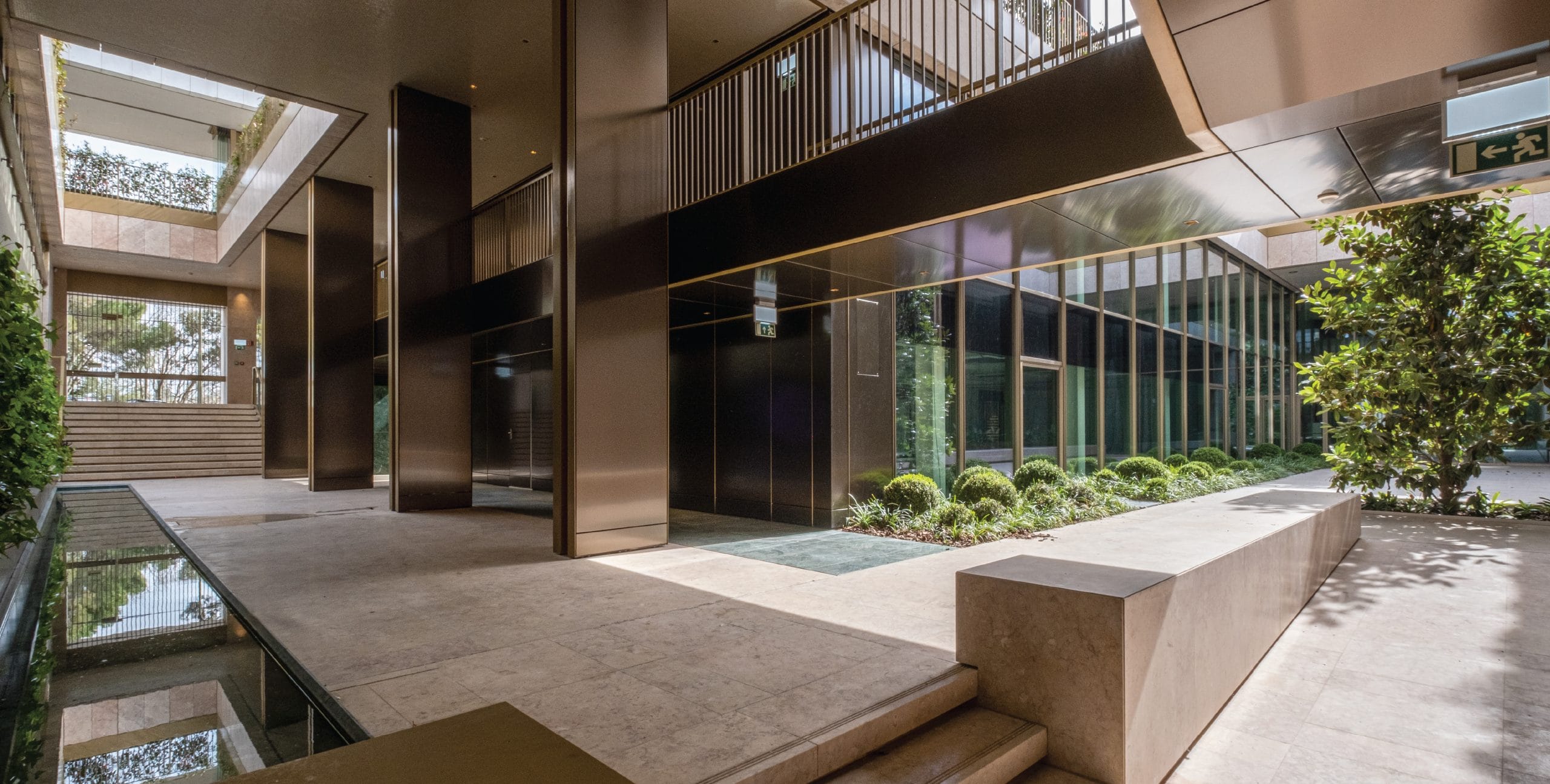
Outdoor spaces such as the garden, terraces and patios are designed as an extension of the architecture, reinforcing the relationship between the built form and its natural setting.
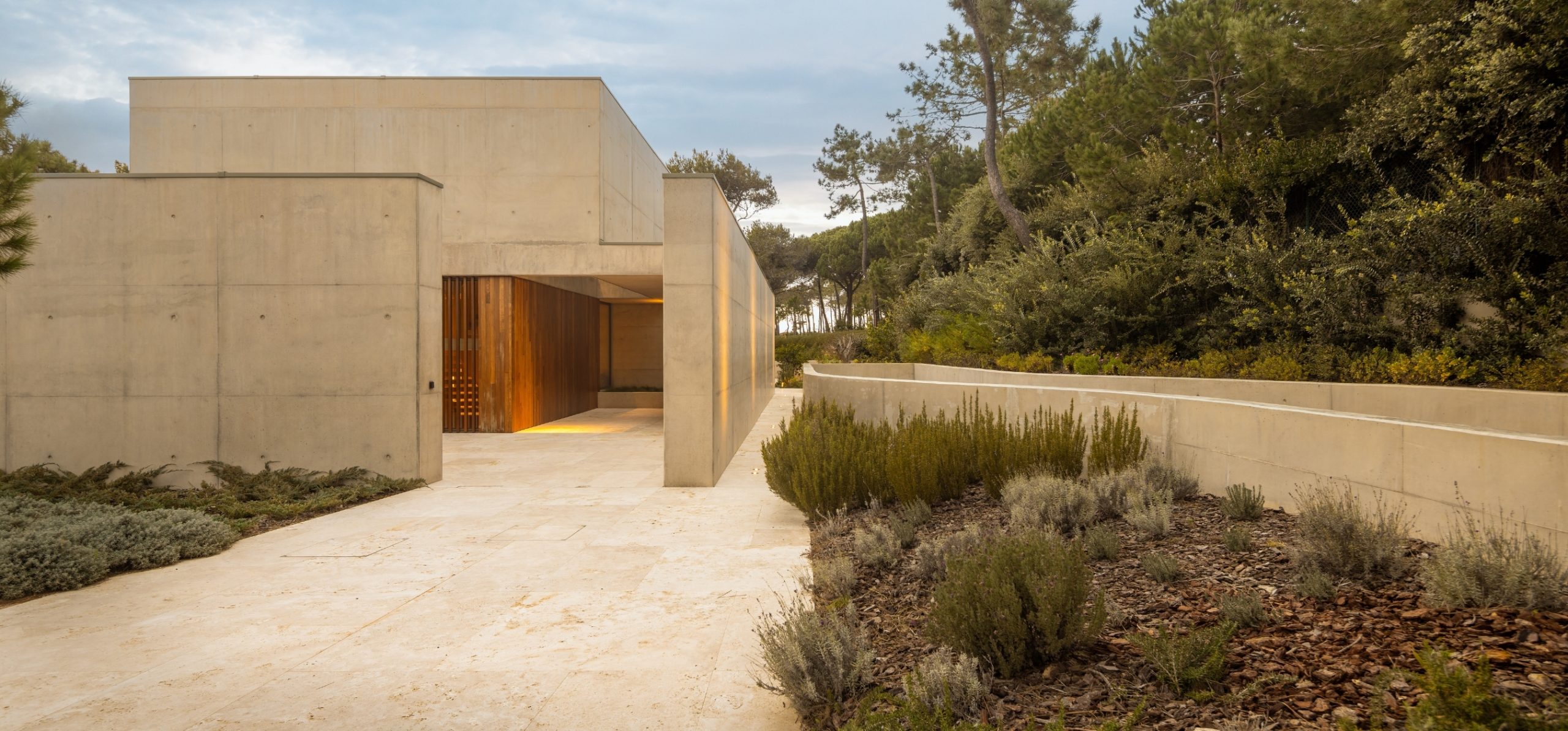
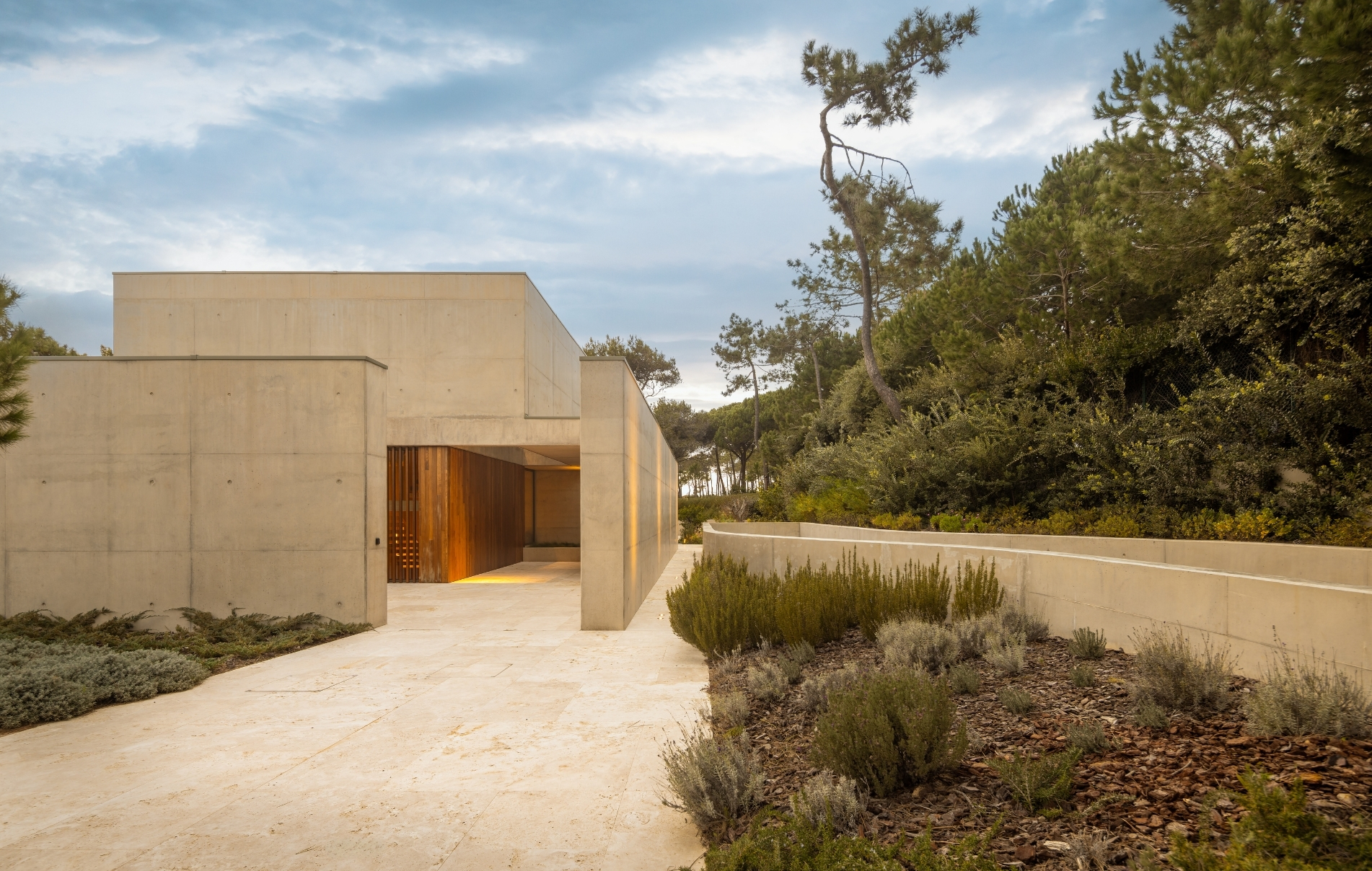
A contemporary house in Cascais that balances material authenticity, spatial clarity and environmental response.